TL;DR
SMS has a 98% open rate and most messages get read within 3 minutes. For restaurants, that means same-day orders you can trigger with one send. Build your list at checkout (phone number for order updates doubles as opt-in), automate five key messages (welcome, win-back, slow-night flash, holiday nudge, loyalty milestone), and stay under 4 texts per month. Follow TCPA rules: explicit opt-in, easy opt-out, business name in every message. The ROI math is simple: one text that drives 8 extra orders on a Tuesday night pays for the entire month.
You spend money getting someone through the door or into checkout for the first time. Then they leave. Maybe they liked it. Maybe they even saved your link. But Tuesday rolls around, they are hungry, and DoorDash is one thumb tap away.
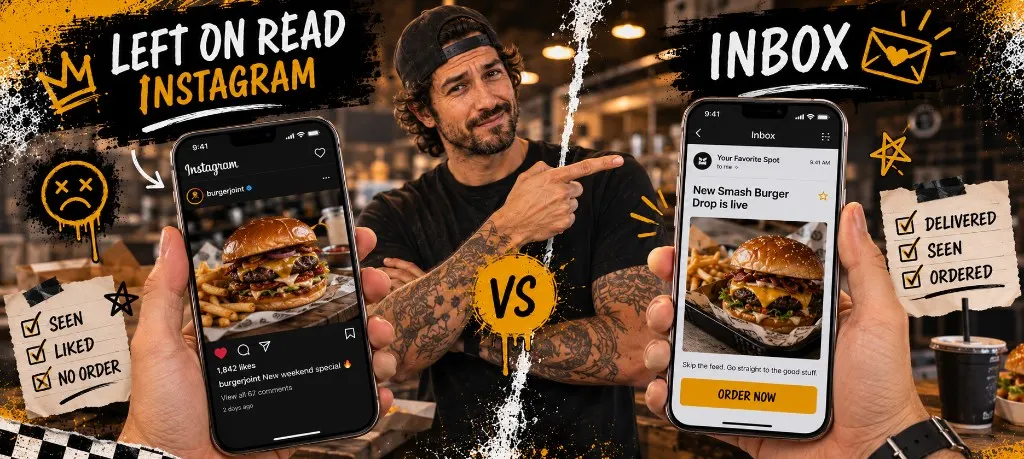
A text at 2pm on that Tuesday changes the math. Not a newsletter they never open. Not an Instagram post buried under 400 reels. A text message that lands on their lock screen, gets read in under three minutes, and says something worth tapping.
This guide covers exactly how to set up SMS marketing for a food truck, pop-up, ghost kitchen, or independent restaurant. No fluff. Real templates, real compliance rules, real numbers on what works.
Why text beats every other channel for restaurants
The numbers tell the story fast. SMS open rates sit around 98%. Email hovers near 20% on a good day. Social organic reach for a restaurant page? Maybe 1-3% of followers see your post without paid spend.
More relevant for food businesses: timing. The average text gets read within 3 minutes of delivery. Email gets opened hours or days later (if at all). When you are trying to fill a slow Tuesday dinner or push the last 20 slots for a Friday pop-up, same-hour reach is everything.
People guard their phone number more than their email. If someone gives you their number, they actually want to hear from you. That is a warmer audience than any social follower or email subscriber.
Put it in real numbers: a restaurant with 300 SMS subscribers and a 36% click-through sends one text and gets 108 people looking at their menu. Try getting that from an Instagram story.
Before you send a single text: compliance basics
Skip this section and you risk fines up to $1,500 per unsolicited text under the TCPA (Telephone Consumer Protection Act). That is not a scare tactic. It is the actual penalty structure. Compliance is not complicated for restaurants. Three rules cover 95% of what you need.
TCPA rules in plain English
- Get explicit written consent before texting anyone. A checkbox at checkout counts. A phone number scribbled on a receipt does not.
- Tell people what they are signing up for. 'Receive order updates and occasional promotions from [Your Restaurant Name]' is enough.
- Let people opt out instantly. Every promotional text needs a way to stop (reply STOP works).
What opt-in actually means (and how to get it at checkout)
The easiest opt-in for restaurants: a checkbox during online ordering. Something like 'Text me order updates and deals from [Restaurant Name].' Pre-checked boxes are legally gray. Unchecked boxes that customers actively tap are clean.
If you use a QR code ordering system, the opt-in can happen right at checkout when they enter their phone number. They are already giving you the number for order confirmations. Adding one line of consent language turns that transaction into a marketing channel.
What every restaurant text must include
- Your business name (people forget who they gave their number to)
- An opt-out instruction (Reply STOP to unsubscribe)
- No misleading content (if you say 'free appetizer' there better be a free appetizer)
How to build your SMS list from zero
Most restaurants already collect phone numbers. They just never use them. If you take online orders, you probably have hundreds of phone numbers sitting in a spreadsheet or payment processor that you have never messaged. That is your starting list (assuming you had consent language at checkout).
The checkout capture (your best opportunity)
Every online order requires a phone number for confirmation. Add one consent checkbox and you convert order flow into list growth automatically. No extra step for the customer. No awkward ask. They are already typing the number.
This is where marketplace apps rob you. When someone orders through DoorDash, DoorDash owns that phone number. You never see it. You cannot text that customer on a slow Wednesday because you do not know who they are. Direct ordering gives you the number and the permission in one transaction.
QR codes at the counter, window, or table
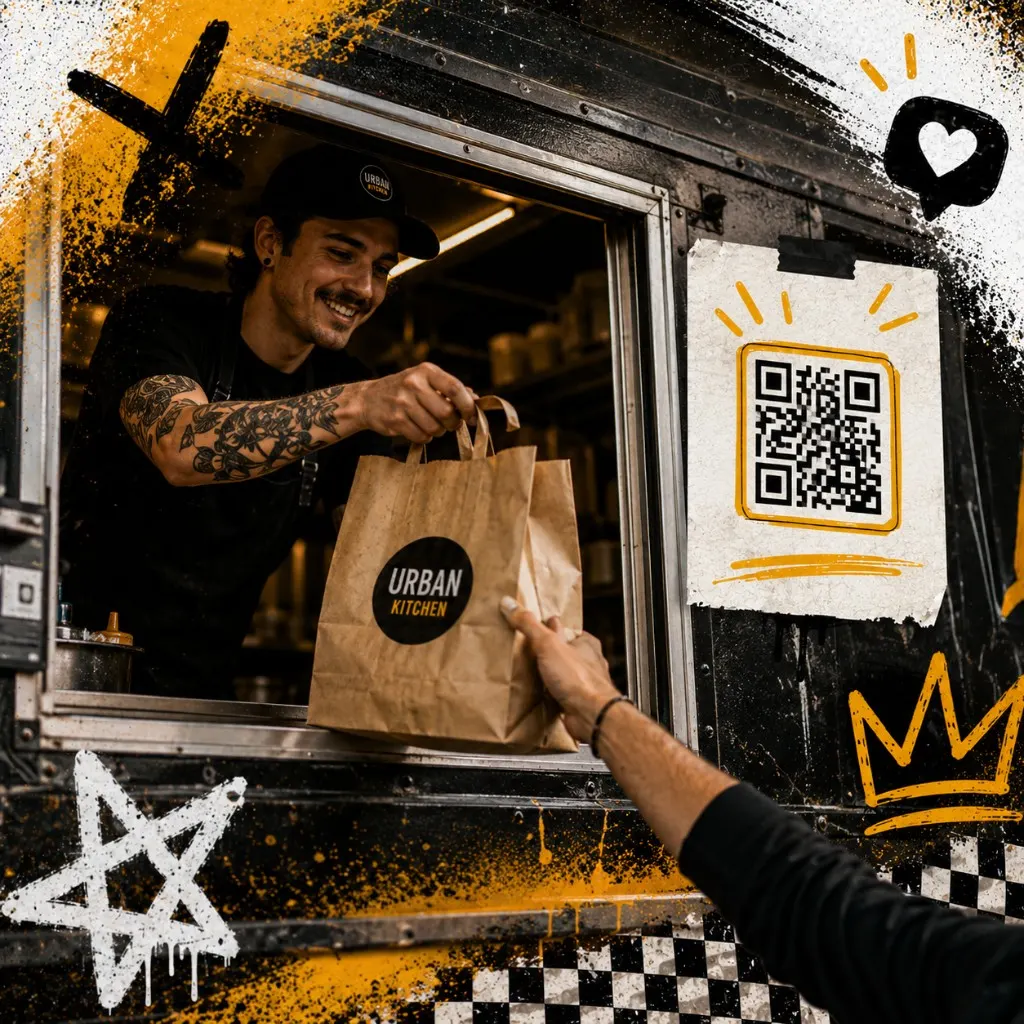
A QR code that says 'Scan for deals and first dibs on specials' works surprisingly well in person. Tape it at the register, print it on the receipt, stick it on the pickup bag. People scan it, enter their number, and you just grew your list during service without saying a word.
Social media and website opt-in prompts
Your Instagram bio, your website header, your Google Business Profile description. Any place you already get eyeballs can point to a simple SMS opt-in page. The pitch should be specific: 'Text TACOS to 55555 for flash deals and first access to sold-out specials.' Vague promises like 'join our text club' do not convert.
In-person asks that do not feel pushy
Train staff with one line: 'Want a text when we drop new specials or sell-out items?' That is it. No pitch. No clipboard. Just a question after a good experience. The answer is yes more often than you would guess.
The five texts every restaurant should automate
You do not need to sit down every week and write a text blast from scratch. Set up these five automated messages once, and they run in the background generating repeat orders while you focus on food.
1. The welcome text (immediately after first order)
Sent automatically when someone places their first order and opts in. Keep it warm, short, and useful.
2. The win-back text (14 days of inactivity)
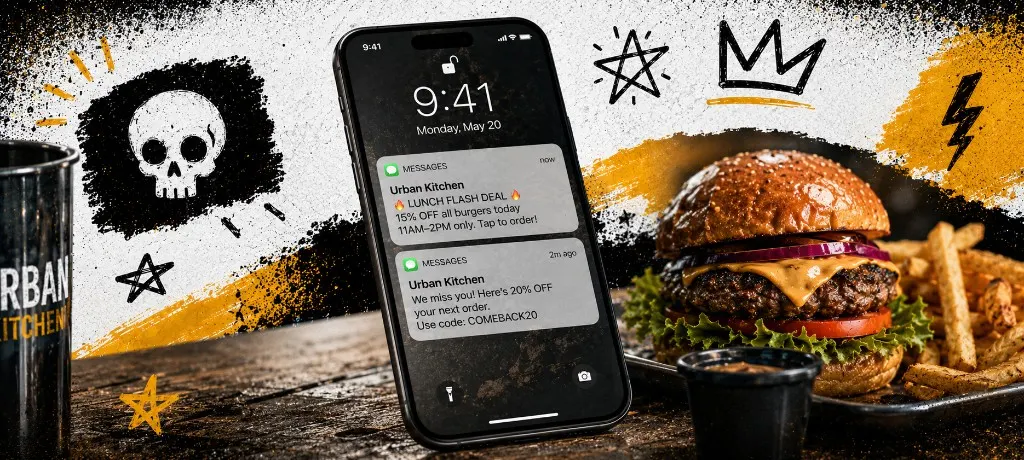
If someone ordered two weeks ago and has not come back, a short nudge works. Not desperate. Not salesy. Just a reminder that you exist and their favorite thing is still on the menu. Restaurants that automate a 14-day win-back see 8-12% of lapsed customers return within 48 hours of receiving it.
3. The slow-night flash deal (Tuesday/Wednesday, sent at 2pm)
Every restaurant has dead nights. Instead of eating the labor cost, send a flash text at 2pm to hit people while they are thinking about dinner plans. The scarcity angle (tonight only, first 15 orders) drives urgency without training customers to wait for discounts every week.
Key detail: send at 2pm, not 5pm. By 5pm people already have plans. At 2pm they are still deciding. You want to be the thing that decides for them.
4. The holiday/event pre-order nudge
Holidays and events are predictable. You know Mother's Day, Super Bowl Sunday, and Cinco de Mayo are coming. Schedule the pre-order text three days before the event. Include a direct link to your pre-order menu with pickup time slots. Customers lock in their order, you lock in your prep volume. No wasted food, no scramble.
5. The loyalty milestone text (5th order, 10th order)
When someone hits a milestone, celebrate it. Not with confetti animations. With something useful: a free item, a discount on their next order, or early access to a new menu drop. The text reminds them they are a regular, and regulars get treated differently.
How often should you text? (The frequency question)
Two to four texts per month. That is the range where engagement stays high and unsubscribes stay low. Go over four and you start training people to ignore you or opt out.
- Under 2/month: people forget you exist between messages. The channel goes cold.
- 2-4/month: sweet spot. Enough to stay top of mind without being annoying.
- 5-8/month: risky. Only works during a specific event week (holiday rush, grand opening, pop-up series).
- Over 8/month: you will bleed subscribers. People will reply STOP and never come back.
Seasonal exceptions exist. The week before Thanksgiving, three texts in five days is fine if each one has a different offer or update. A random Tuesday in February? One text that week, max.
Measuring what matters
You do not need a data science degree. Track four numbers weekly and you will know if SMS is working.
- Click-through rate: What percentage of people who received the text tapped the link? Above 20% is good. Above 30% is great.
- Redemption rate: Of people who clicked, how many placed an order? Track this by using a unique link or promo code per campaign.
- List growth rate: How many new numbers are you adding per week? If growth stalls, your checkout opt-in might need better copy.
- Unsubscribe rate: If more than 3% opt out after a single send, something is wrong. Too frequent, too generic, or the offer was not relevant.
The ROI math is simple. If your average order is $28 and one text drives 8 extra orders on a slow Tuesday, that is $224 in revenue from a message that took 45 seconds to write. Even with a per-message cost of $0.01-0.05, the return is absurd compared to any other channel.
Common mistakes that kill your SMS program
- Texting without opt-in. Besides the legal risk, people who did not ask to hear from you will never convert. You are wasting money and burning trust.
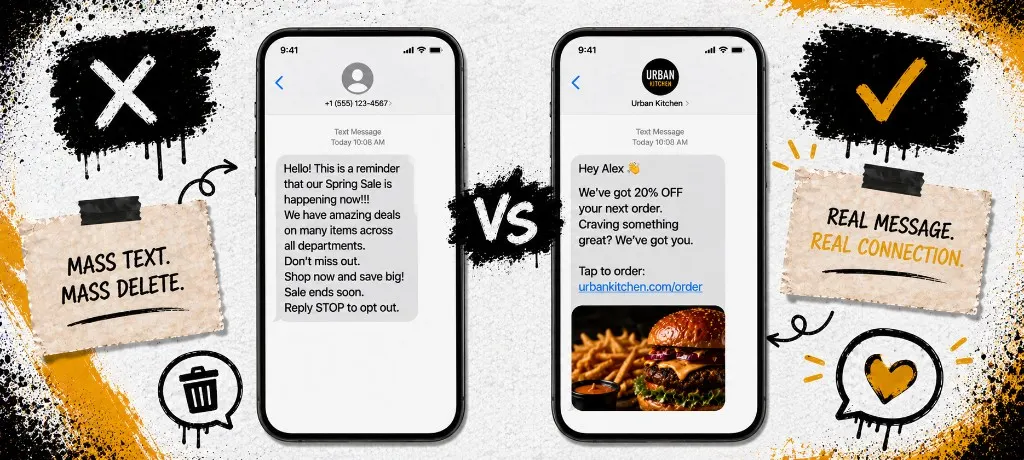
- Generic messages. 'Hi valued customer, check out our specials!' reads like spam. Use their name if you have it. Mention a specific item. Sound like a human running a kitchen, not a marketing department.
- Only sending discounts. If every text is 15% off, you train people to never order at full price. Mix in new menu drops, behind-the-scenes updates, and early access that does not cost you margin.
- No link in the message. Every promotional text should include a direct order link. Make it one tap from reading to checkout. If they have to Google you after reading your text, you lost half of them.
- Ignoring STOP requests. Besides being illegal, one angry person who cannot unsubscribe will leave you a one-star review and tell ten friends. Process opt-outs instantly.
Frequently asked questions
Templates
SMS marketing FAQ for restaurants
SMS is not a magic bullet. It will not fix bad food or a broken kitchen. But if you already have customers who liked what they ordered, text is the fastest way to get them back for under a penny per message. One send, three minutes to read, one tap to order.
Start with the checkout opt-in. Set up the welcome text and the 14-day win-back. Send one flash deal on your slowest night this week. Measure what happens. Then decide if you want to build from there.
Ready to text your customers?
Outbites includes SMS and email campaigns tied to your direct ordering link. Capture phone numbers at checkout, automate win-backs, and send flash deals. No separate tool required.
Start free trial
Katie Carswell
Account & Social Media Manager
Sharing firsthand stories and lessons learned from running an independent restaurant: margins, marketing, and owning your customer relationships.
How this guide was put together
This article was written for independent food businesses looking for practical ways to grow direct orders, repeat visits, and customer relationships. We keep the advice operator-focused, avoid generic playbooks, and update posts when the restaurant marketing landscape changes.