TL;DR
Chargebacks are bank disputes, not guest refunds. You lose the ticket, the food, and a processor fee on top. Stolen cards, friendly fraud, and never-received claims are the three types that hit online orders hardest. Turn on CVV, log pickup timestamps, verify large first-time orders, and build an evidence folder before the alert lands. Direct ordering through Stripe or Square gives you better dispute data than marketplace tickets. Run the calculator at your real order volume, score your exposure, and close the gaps on the checklist.
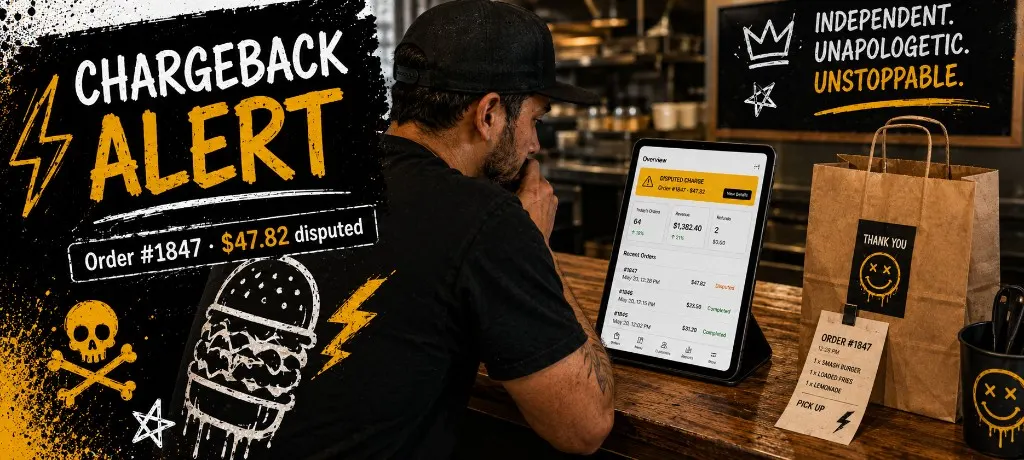
You made the food. You bagged it. The guest picked it up or the driver left the porch. Two weeks later your phone buzzes: disputed charge, $47.82. The bank sided with the cardholder before you even knew there was a fight.
That's a chargeback. Not a refund request. Not a complaint on Google. A formal dispute where the card issuer pulls money back from your merchant account and charges you a fee for the privilege of losing. Chains have fraud analysts. You have a manager who runs payroll and fixes the ice machine.
Before we talk prevention, run your real numbers. A shop doing 400 online orders a month at a $32 average ticket doesn't feel 0.8% until you add it up.
Chargebacks vs Refunds (Not the Same Thing)
A refund is you choosing to return money because the order was wrong, late, or the guest asked nicely. You control the timing. You keep the relationship.
A chargeback is the cardholder telling their bank they didn't authorize the charge, never received the food, or want their money back without talking to you. The bank reverses the payment. You get a notice in your Stripe or Square dashboard with a deadline. Miss it and you lose by default.
The Three Fraud Types That Hit Online Orders
Not every dispute is theft. Knowing which type you're fighting changes what evidence you need.
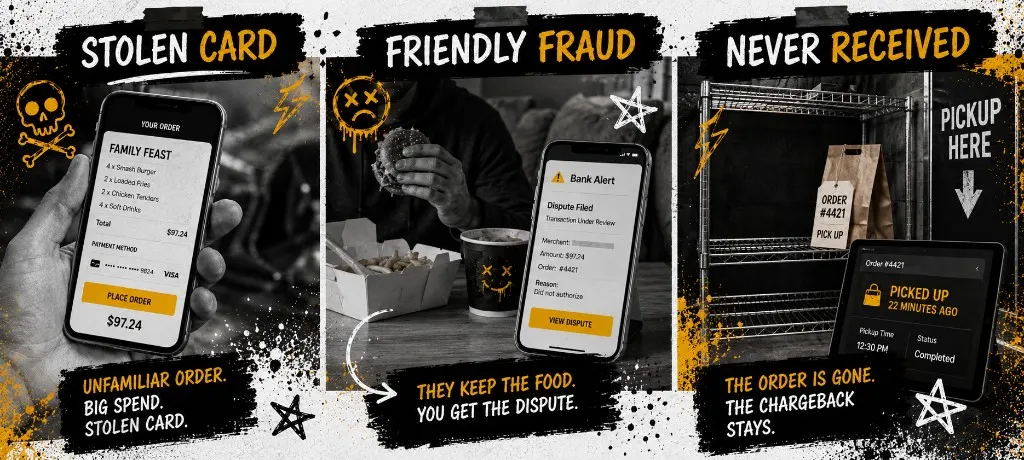
- Stolen card fraud: Someone uses a card that isn't theirs. Large first-time orders, rush delivery to an address far from your usual radius, multiple orders same card same hour. Prevention: CVV, AVS match, caps on first-time guests.
- Friendly fraud: The real cardholder ordered, ate the food, then filed a dispute claiming they never authorized it. Hardest to prevent. Documentation wins: confirmation email, pickup timestamp, IP and device data from your processor.
- Never received claims: Guest says food never arrived. Common on delivery. Prevention: driver photo, handoff confirmation, clear pickup instructions. On direct pickup, your timestamp log is the whole case.
What a Chargeback Actually Costs You
The math is worse than the disputed dollar amount on the screen. You already paid food cost on that ticket. Labor fired it. Packaging is gone. Now the processor pulls the full $47.82 back and charges you $20 for handling the dispute. Win the case and you might get the ticket back. You never get the food back.
At three disputes a month on a $32 average ticket with a $20 fee, you're looking at roughly $156 a month in direct losses before staff time. That's $1,800 a year you could've spent on a promo that brings real guests back. For context on where margin leaks elsewhere, see the delivery app commission guide.
How Exposed Is Your Setup?
Most independents discover their gaps after the first dispute. Answer five questions honestly. No shame in a low score. That's the point.
Seven Prevention Moves You Can Turn On This Week
- Require CVV on every card order. Stripe and Square support it. Turn it on in checkout settings. It blocks a chunk of stolen card attempts before the kitchen prints.
- Enable AVS (address verification). Flag orders where billing ZIP doesn't match. Review before you fire a $120 first-time ticket.
- Cap first-time guest order size. $75 max until they have a successful pickup history. Annoying for one guest. Cheaper than one dispute.
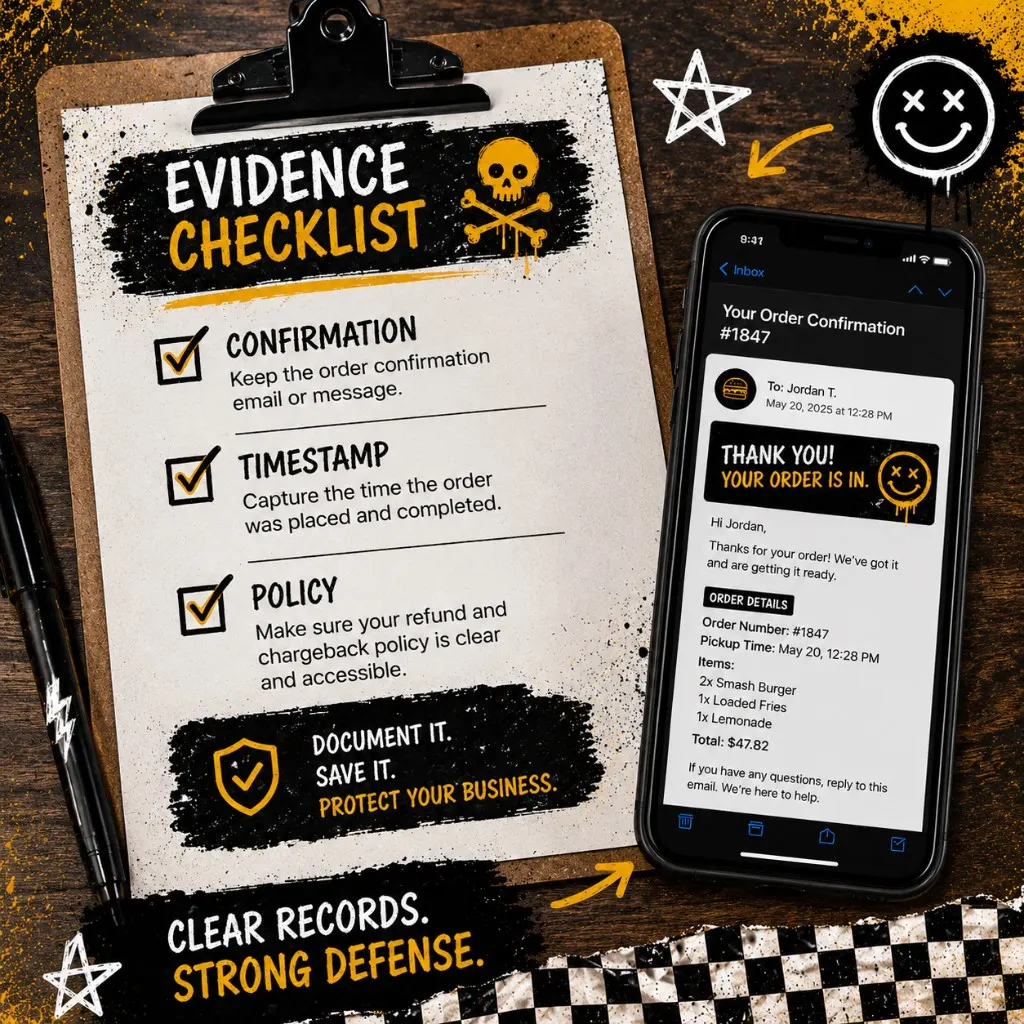
- Send confirmation emails automatically. Item list, total, pickup window, your address. That's exhibit A in friendly fraud cases.
- Log pickup timestamps. Mark ready time and handoff time in your POS or ordering system. "Picked up 6:14 PM" beats "we think they got it."
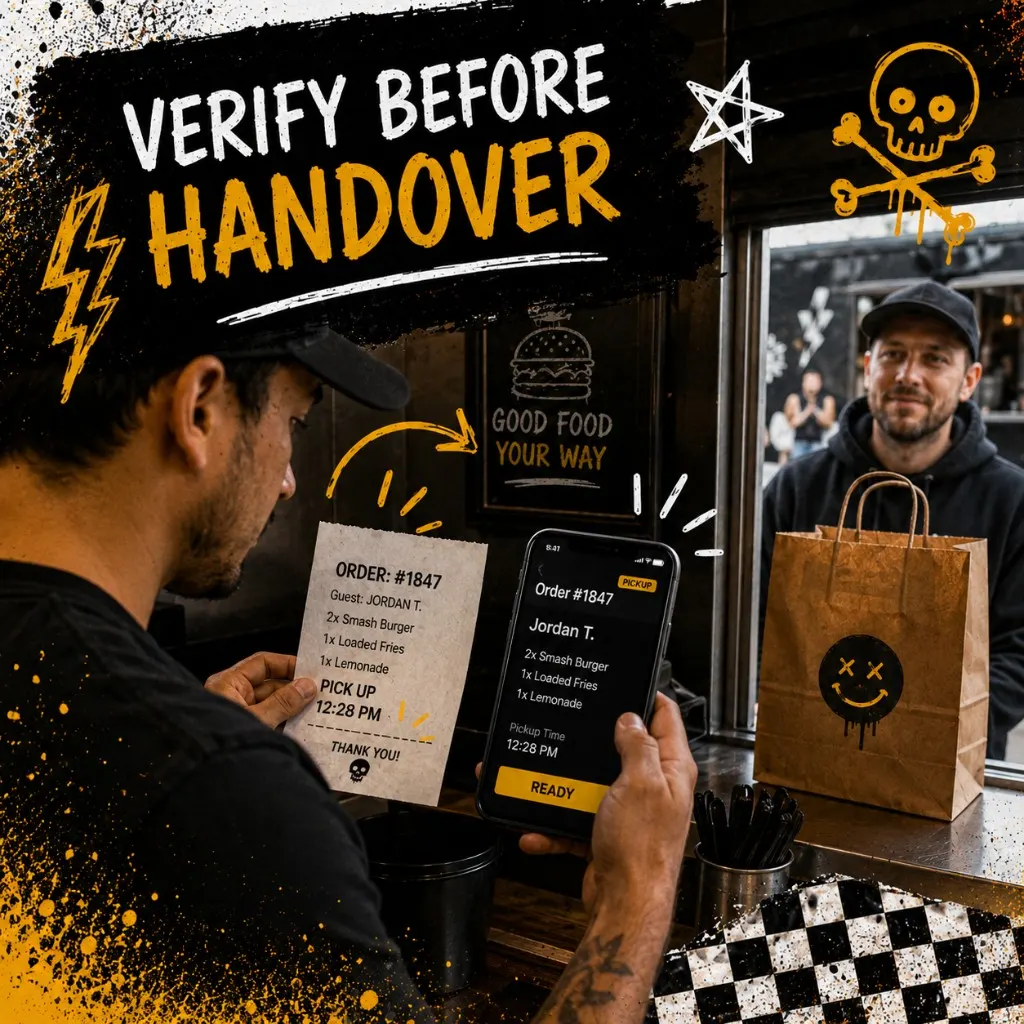
- Verify large pickups at the window. Name plus last four of card on orders over $75. Ten seconds at handover.
- Post refund policy on checkout. Clear cancellation window. Card networks weigh merchant policy in disputes.
Who Eats the Loss: Marketplace, Processor, or You
On DoorDash and Uber Eats, the platform often intermediates payment disputes. You still feel it as adjusted payouts, chargeback deductions, or account warnings. You rarely see the full evidence trail. The guest relationship stays with the app, not you.
On direct ordering through Stripe or Square, the dispute lands in your merchant dashboard. You own the response. That sounds scary until you realize you also own the confirmation emails, pickup logs, and guest contact info. Operators who build a first-party customer list can often prove delivery faster than a marketplace ticket with no guest email on file.
Outbites routes payments through your connected Stripe or Square account. Disputes follow your processor's flow. There's no separate monthly fraud insurance line item. What you get is order data you control: timestamps, guest contact, item-level detail. That's the raw material for winning cases. See Outbites pricing for how direct ordering fees compare to eating disputes on top of marketplace commission.
Build Your Dispute Evidence Folder Before You Need It
Winning disputes is a paperwork game. Operators who lose usually lost on missing files, not missing merit. Check what you already have.
When the Alert Hits: Your Response Window
Stripe and Square typically give you 7 to 21 days to respond. Treat day one like a health inspection. Drop everything else.
- Day 1: Open the dispute in your processor dashboard. Read the reason code (fraud, product not received, duplicate, etc.). Pull the order in your POS or Outbites Kitchen.
- Day 1–2: Gather evidence: confirmation email, order detail screenshot, pickup or delivery timestamp, guest IP if available, refund policy copy, any guest messages.
- Day 2–3: Write a short factual summary. No emotion. "Order #1847 placed 6/12 at 5:41 PM. Marked ready 6:02 PM. Picked up 6:14 PM per system log. Confirmation sent to guest@email.com."
- Before deadline: Upload attachments and submit. Screenshot the confirmation page.
- After decision: If you lose on a weak case, accept it and fix the gap. If you lose on a strong case with proof, ask your processor why. Patterns matter for future disputes.
Why Direct Ordering Changes Your Dispute Odds
Marketplace orders hide guest emails. Dispute notices arrive with less context. You fight blind while still paying commission on the original ticket.
Direct orders capture contact info at checkout. You send confirmations from your domain. Pickup logs tie to a guest you can email if something looks off before they dispute. Moving repeat guests to direct is already a margin play. It's also a fraud defense play. The migration playbook covers how to dual-run without killing a week of sales.
Templates
Common questions about restaurant chargebacks
Chargebacks aren't going away as online ordering grows. The operators who bleed least aren't the ones with the fanciest fraud software. They're the ones who log every handoff, email every confirmation, and respond before the deadline. Run the calculator, score your exposure, print the checklist, and fix the gaps this week.
Direct ordering with data you can defend
Outbites gives independents branded checkout, guest contact capture, and order timestamps tied to your Stripe or Square account. Build the evidence trail before the dispute lands.
Start with Outbites
Katie Carswell
Account & Social Media Manager
Sharing firsthand stories and lessons learned from running an independent restaurant: margins, marketing, and owning your customer relationships.
How this guide was put together
This article was written for independent food businesses looking for practical ways to grow direct orders, repeat visits, and customer relationships. We keep the advice operator-focused, avoid generic playbooks, and update posts when the restaurant marketing landscape changes.