
Revenue Growth

Don't Work a Double for Tip-Jar Deposits: Fix Your Menu Prices

Guessing prices feels fine until food costs creep up and your "busy" nights still leave the drawer thin. Here's how independents set menu prices with plate cost, not vibes.

Katie Carswell

Katie Carswell

Account & Social Media Manager

9 min read
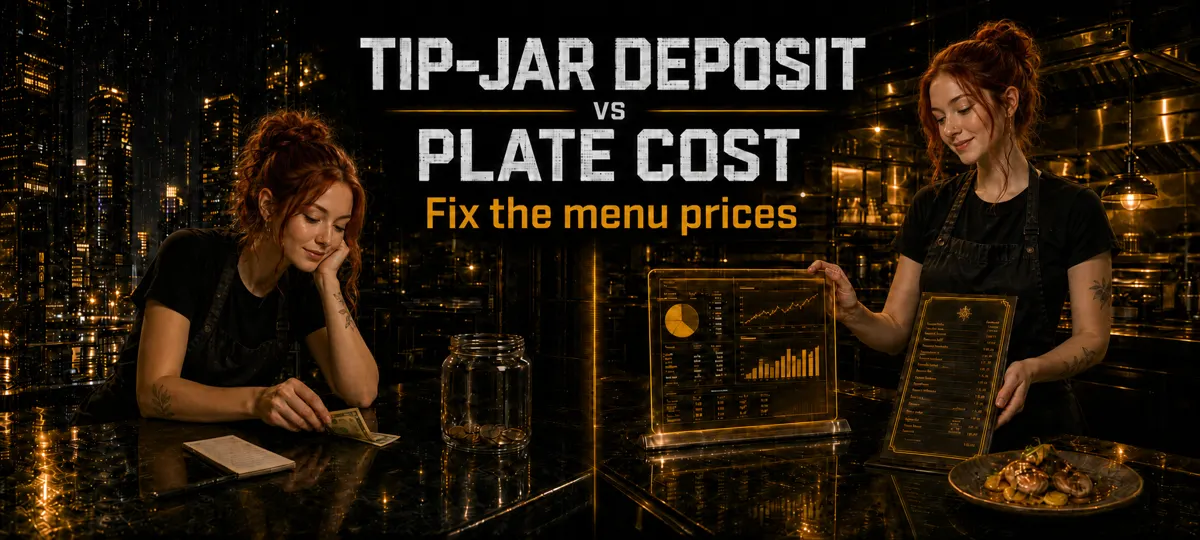
Split scene with a tired restaurant owner counting a thin bank deposit after a double on the left and a calm owner next to a clear plate-cost worksheet with suggested menu prices on the right

TL;DR

Write down plate cost for every seller. Pick a target food-cost percent that fits your format. Price from that math, not from panic. When costs rise, raise the items that move volume and protect margin. Use the menu price calculator, menu engineering quiz, and price-raise copy templates on this page whenever you rewrite a board.

You didn't open a food truck or a small restaurant to become an accountant. You also didn't open one to work a double and wonder why the bank deposit looks like a tip jar. Menu pricing is the boring math that keeps the fun part funded.

This guide is for independents who price by gut, copy a competitor, or freeze prices for two years while chicken and oil climb. You'll get a simple plate-cost method, raise math you can show a partner, and a quick way to sort stars from dogs. If you're hunting checkout upsells instead of base prices, start with the AOV upsell guide. Different job.

Plate costWhat the item costs you before labor, rent, or ads
~28–35%Common food-cost target range many operators plan around (not a law)
Same dayUpdate board, online menu, and apps together when you raise

Plate Cost First. Vibes Second.

Plate cost is the grocery receipt for one finished portion. That means the protein and the bread, plus every topping, sauce, pickle, and free lime wedge you pretend doesn't count. Weigh it once and write the number down. If you can't name the cost within a dollar, you're not pricing. You're hoping.

Target food cost is the share of the menu price you want that plate to eat. Many full-service and QSR operators plan somewhere around the high twenties to mid-thirties. Trucks and pop-ups sometimes run tighter or looser depending on labor, lot fees, and how much volume they push. Treat the range as a planning lane, not a report card from the food police.

  • Suggested price = plate cost ÷ target food-cost percent (as a decimal)
  • Example: $3.60 plate cost at 30% target → $3.60 ÷ 0.30 = $12.00 menu price
  • Round for humans: $11.95 or $12 beats $11.87 nobody remembers
  • Recheck after raises from suppliers: if chicken jumps $0.40/lb, re-run top sellers that week
Interactive calculator

Menu price calculator

Enter plate cost and a target food-cost percent. Get a suggested price you can copy to your board.

Suggested price

$12.00

Rounded

$11.95

At 30% food cost, a $3.60 plate suggests about $12.00 before you round for the board.

When Costs Creep, Don't Freeze the Board

Holding prices while ingredients rise feels loyal. It's also how busy kitchens go broke. Guests notice a surprise $2 jump more than three small steps over a year. Plan raises. Announce them once. Move on.

Prioritize items that sell often. A $0.50 raise on your #1 taco can protect more margin than a $2 raise on a special nobody orders. Pair this with commission awareness: if marketplace fees already skim 15–30% on delivery tickets, underpricing there double-taxes you. Run the commission guide and the fee calculator beside your plate-cost sheet.
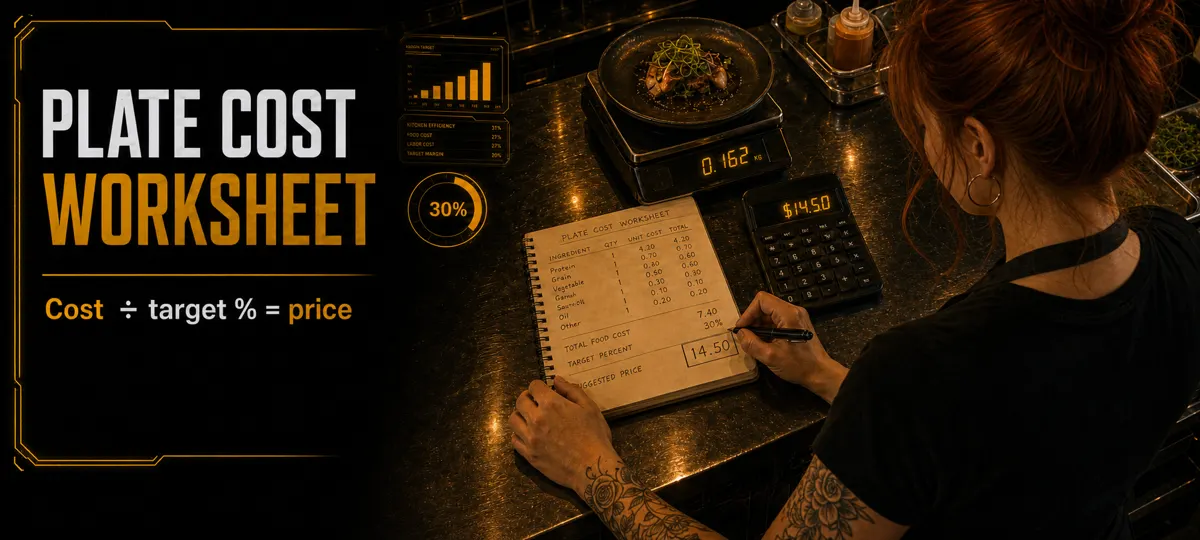
Restaurant owner at a prep table with a handwritten plate-cost worksheet listing ingredients and a calculator showing suggested menu price
If the worksheet is blank, the menu price is a rumor.

Show Me the Extra Dollars

Partners and co-owners like numbers. So do you, at 11 PM, when you're arguing with yourself about a fifty-cent bump. Multiply monthly units for a top seller by the raise amount. That's what one line adds before you touch the rest of the board.

This isn't permission to jack everything overnight. It's a flashlight. Raise the items that move, watch guest reaction for two weeks, then decide on the long tail. Track ticket size and mix in whatever analytics you already trust.

$0.50 × 800Example: fifty-cent raise on a top seller moving 800 units a month
+$400/moExtra monthly revenue from that one line before you touch the long tail
+$4,800/yrSame raise, annualized. Small bump. Real money.

Classic menu engineering sorts items by popularity and contribution. You don't need a consultant badge. You need honesty about what sells and what prints money after food cost.

  • Stars: High volume, solid margin. Protect them. Don't bury them under a weak photo.
  • Workhorses (plowhorses): High volume, thin margin. Raise carefully, shrink portions smartly, or bundle a side that lifts ticket.
  • Puzzles: Low volume, strong margin. Feature them. Rename them. Put them where eyes land.
  • Dogs: Low volume, weak margin. Cut them or make them specials until they prove they belong.
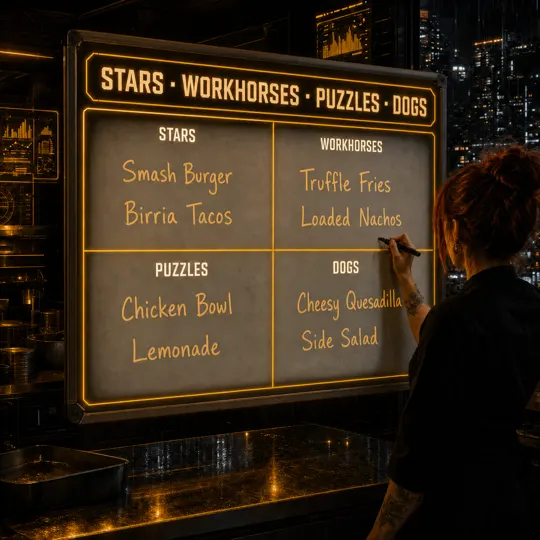
Whiteboard showing a 2-by-2 menu engineering grid labeled Stars, Workhorses, Puzzles, and Dogs with menu items written in each box
Four boxes beat a menu that never gets edited.
Quick quiz

Menu engineering triage

Two questions about one menu item. Get a star, workhorse, puzzle, or dog playbook.

Question 1 of 2

How popular is this item vs your other sellers?

Same Food. Different Checkout. Same Price Discipline.

Your direct link and your marketplace listing shouldn't tell two different stories on price unless you're running a clear dual-menu strategy on purpose. Guests screenshot. Staff get yelled at. You look unserious.

Direct ordering still wins on margin when marketplace commissions vanish. Outbites charges $1 per fulfilled order on the platform fee (you choose Pass, Split, or Pay). That math only helps if your base menu price already covers food. Cheap prices on a commission-free channel still leave you broke. See Outbites pricing when you're ready to connect checkout to the board you just fixed.
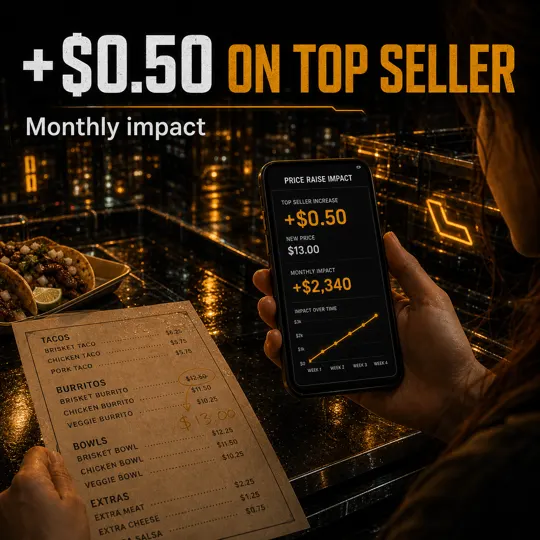
Operator holding a phone showing a price raise impact summary next to a printed menu with a circled price change on the top seller
One raise on a top seller beats ten nervous edits nobody notices.

Five Pricing Mistakes That Quietly Steal the Shift

  1. Copying the truck next door. Their rent, labor, and recipes aren't yours.
  2. Ignoring sauces and freebies. "Just a splash" adds up across hundreds of tickets.
  3. Raising everything the same day by the same percent. Guests feel the shock. Prioritize movers.
  4. Updating the window but not the online menu. Online guests order the old price. You eat the difference.
  5. Never rechecking after a supplier hike. Plate cost isn't a one-time homework assignment.
Copy and paste

Price raise copy you can paste today

Replace bracketed placeholders. Tell staff first, then update every board guests see.

Staff huddle line New prices start [DATE] at open. Top change: [ITEM] moves from [OLD PRICE] to [NEW PRICE]. Board, online menu, and apps all match. If a guest asks why, say food costs went up and we raised the movers first. Instagram / story caption Small price update on a few favorites starting [DATE]. Same recipes. Same portions. Costs climbed, so we fixed the board instead of shrinking the plate. Order: [DIRECT LINK] SMS to opted-in regulars [BRAND]: Heads up. [ITEM] and a few other sellers get a small price update on [DATE]. Same food. Order ahead: [LINK]. Reply STOP to opt out. Window / chalkboard note UPDATED PRICES [DATE] [ITEM] [NEW PRICE] Ask us about today's specials

Staff huddle line

New prices start [DATE] at open. Top change: [ITEM] moves from [OLD PRICE] to [NEW PRICE]. Board, online menu, and apps all match. If a guest asks why, say food costs went up and we raised the movers first.

Instagram / story caption

Small price update on a few favorites starting [DATE]. Same recipes. Same portions. Costs climbed, so we fixed the board instead of shrinking the plate. Order: [DIRECT LINK]

SMS to opted-in regulars

[BRAND]: Heads up. [ITEM] and a few other sellers get a small price update on [DATE]. Same food. Order ahead: [LINK]. Reply STOP to opt out.

Window / chalkboard note

UPDATED PRICES [DATE] [ITEM] [NEW PRICE] Ask us about today's specials


Templates

Common questions about restaurant menu pricing

1. How do I price a food truck menu item? Add up plate cost for one portion, divide by your target food-cost percent, then round to a clean price. Recheck after supplier changes and lot-fee seasons. Use the calculator on this page with your real numbers. 2. What food cost percent should a restaurant aim for? Many operators plan somewhere around 28–35%, but format, labor, and rent change the right lane. Treat it as a planning range. Your books and goals decide the exact target. 3. How often should I raise menu prices? When plate cost drifts above your target on items that sell, or when you rewrite the seasonal board. Small, planned steps usually land better than a rare giant jump. 4. Is menu pricing the same as increasing average order value? No. Pricing sets the base. AOV work (combos, upsells, add-ons) lifts the ticket after the guest is already ordering. Use both. Don't confuse them. 5. Should marketplace and direct menus have the same prices? Usually yes for guest trust, unless you run a deliberate dual-menu strategy and staff can explain it. Either way, price from plate cost first so neither channel sells you into a hole.
Add up plate cost for one portion, divide by your target food-cost percent, then round to a clean price. Recheck after supplier changes and lot-fee seasons. Use the calculator on this page with your real numbers.
Many operators plan somewhere around 28–35%, but format, labor, and rent change the right lane. Treat it as a planning range. Your books and goals decide the exact target.
When plate cost drifts above your target on items that sell, or when you rewrite the seasonal board. Small, planned steps usually land better than a rare giant jump.
No. Pricing sets the base. AOV work (combos, upsells, add-ons) lifts the ticket after the guest is already ordering. Use both. Don't confuse them.
Usually yes for guest trust, unless you run a deliberate dual-menu strategy and staff can explain it. Either way, price from plate cost first so neither channel sells you into a hole.

A thin deposit after a double isn't bad luck. It's what happens when the board never meets a receipt. Run the calculator, fix your top ten, and put the new prices everywhere guests look. Then go cook.

Price it right. Take the order direct.

Outbites gives you a branded ordering link at $1 per fulfilled order, with SMS, email, and loyalty so priced-right menus turn into repeat tickets you own.

Start with Outbites

Tags: restaurant menu pricing food cost calculator how to price a food truck menu menu engineering restaurant menu price increase calculator
Katie Carswell

Katie Carswell

Account & Social Media Manager

Sharing firsthand stories and lessons learned from running an independent restaurant: margins, marketing, and owning your customer relationships.

Editorial note Revenue Growth Published July 28, 2026

How this guide was put together

This article was written for independent food businesses looking for practical ways to grow direct orders, repeat visits, and customer relationships. We keep the advice operator-focused, avoid generic playbooks, and update posts when the restaurant marketing landscape changes.
Topics covered restaurant menu pricing food cost calculator how to price a food truck menu menu engineering restaurant

Continue Reading

More from the Blog