TL;DR
Pick one of three structures: points-based (high-frequency, low-ticket), visit-based punch card (moderate frequency), or tiered status (higher-ticket, less frequent). Set the reward so 70% of regulars earn it within 4-6 visits. Auto-enroll at checkout with no separate signup step. Launch quietly for 2 weeks to catch issues. Measure enrollment rate (target 40%+), redemption rate (target 60-80%), and repeat visit lift (target 30-50% more visits from members). Give it 90 days before changing the structure.
You already know repeat customers are worth more than new ones. The data is clear: 73% of diners will not come back without a reason to. But knowing you need a loyalty program and knowing how to build one that fits a food truck, pop-up, or 12-table restaurant are two different problems.
This guide skips the enterprise solutions. No $500/month apps. No tablet kiosks. Just the program structures that work for small food businesses, the math behind setting rewards correctly, and the setup steps to launch in a week.
Before you pick a program type, check whether your operation is ready to launch one. Most owners score lower than they expect on the first pass.
Three Loyalty Program Types That Fit Small Restaurants
Every loyalty program in the restaurant world is a variation of three structures. Pick the one that matches your customer visit frequency, average ticket, and operational complexity tolerance.
1. Points-based (best for high-frequency, lower-ticket businesses)
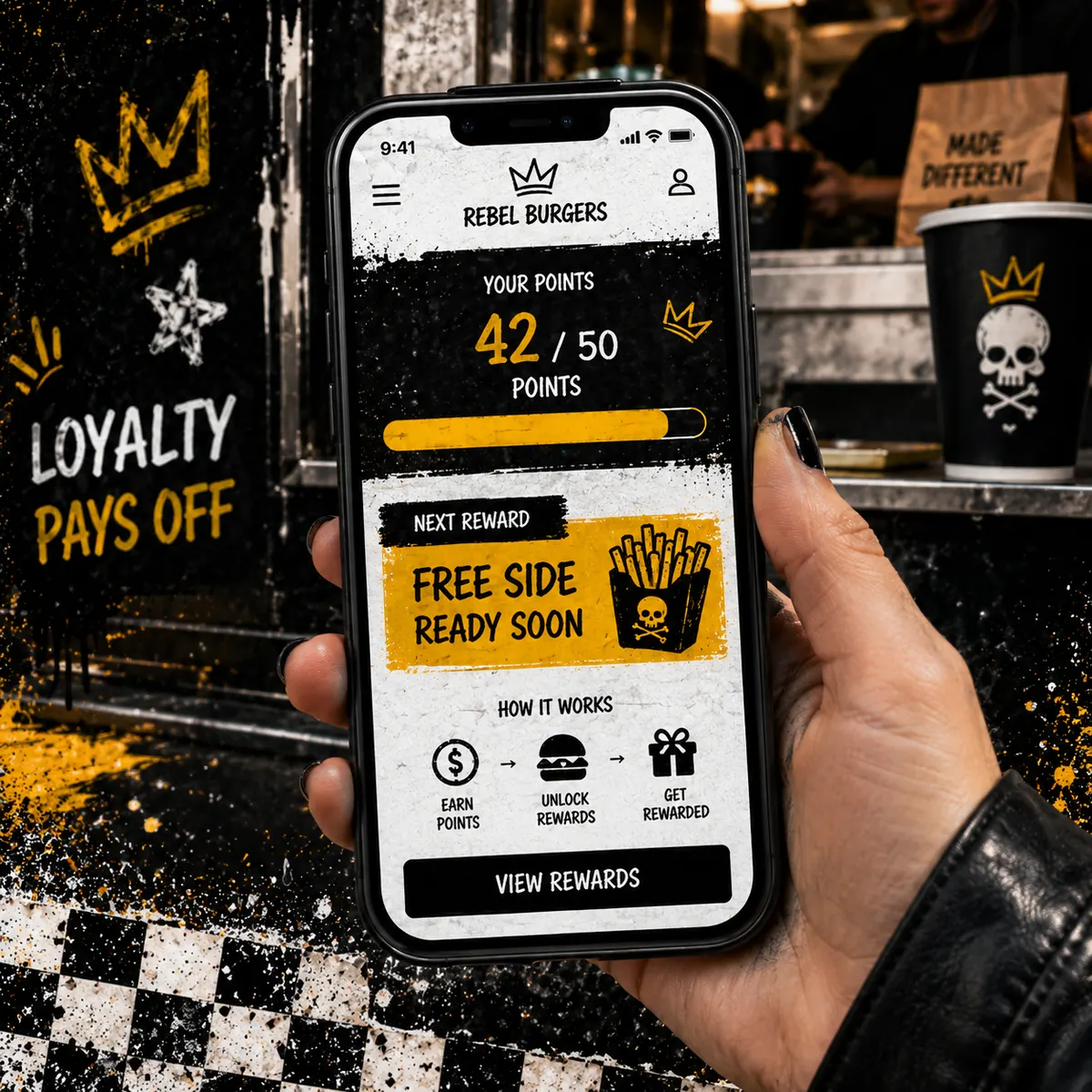
Customers earn points on every dollar spent. Redeem at a threshold. Classic example: 1 point per dollar, $5 reward at 50 points. Works well for food trucks, coffee shops, and fast-casual spots where guests visit 2+ times per week and tickets are under $20. The psychology works because progress feels constant.
2. Visit-based / punch card (best for moderate frequency, simple operations)
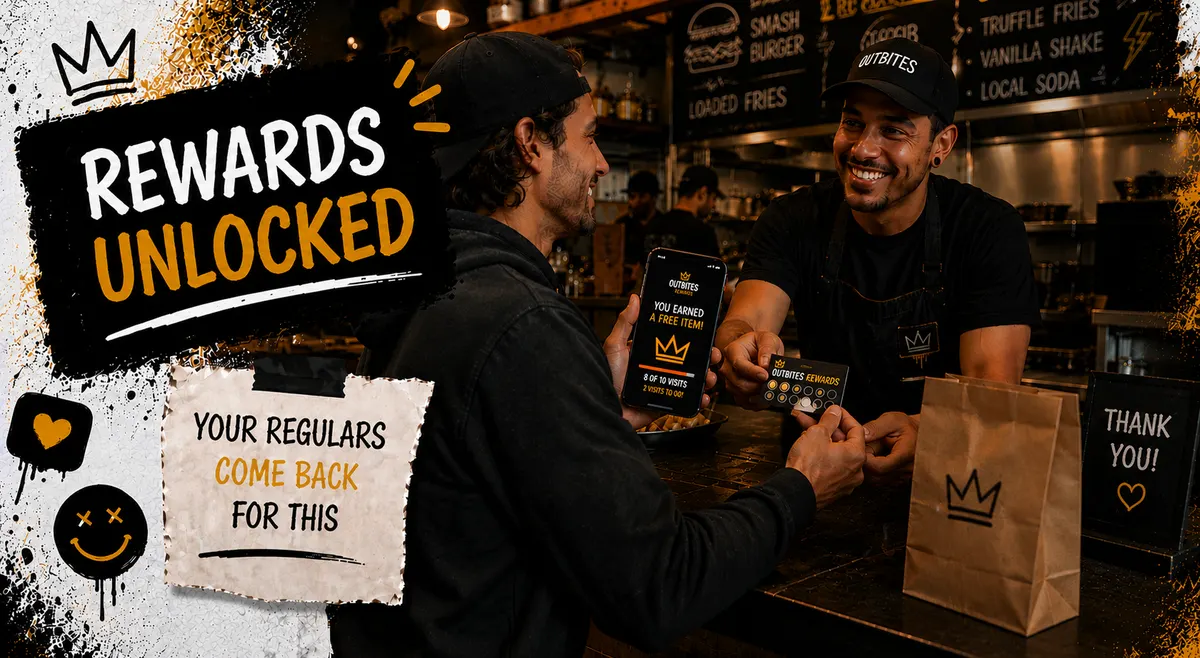
Buy X, get one free. Digital or physical. Works for restaurants where the ticket is relatively consistent and visits happen 1-3 times per month. Pizza shops, sandwich counters, and food truck regulars love this because the goal is clear and the math is obvious. "Buy 8, get the 9th free" is universally understood.
3. Tiered status (best for higher-ticket, lower-frequency businesses)
Customers unlock tiers (Bronze, Silver, Gold) based on total spend or visit count. Each tier adds perks: early access to specials, exclusive menu items, birthday rewards, priority catering. Works for restaurants with $30+ average tickets where guests visit monthly. The status itself becomes the incentive.
Not sure which fits you? Use the quiz below. Answer three questions and get a recommendation based on your specific format.
The Reward Math: Setting Thresholds That Work for Both Sides
Set rewards too high and nobody reaches them. Set them too low and you lose margin with nothing to show for it. The sweet spot: 70% of your regulars should be able to earn their first reward within 4 to 6 visits.
- Points programs: Set the reward at 3-5x your average ticket. If your average order is $15, the reward should unlock at $45-75 in spend (45-75 points at 1:1).
- Visit programs: 8-10 visits for a free item is standard. Shorter (5-6) for highly competitive markets. Longer (12+) for higher-ticket restaurants.
- Tiered programs: First tier should unlock within 60 days of normal behavior. If a regular visits twice per month and spends $40 each time, Silver at $200 lifetime spend (about 2.5 months) feels achievable.
The reward itself should have high perceived value but low food cost. A free side ($4 menu price, $0.80 food cost), a free drink ($3 menu price, $0.40 food cost), or a percentage off the next order (10-15%) all work. Avoid giving away your highest-cost entree as the reward.
Before you announce the program, plug your ticket size and visit count into the calculator below. If the projected reward cost eats more margin than one extra visit per member covers, adjust the threshold before launch.
Setting Up Your Program This Week (Step by Step)
You do not need a separate app, a new tablet, or a consultant. Here is the launch sequence:
- Pick your program type. Use the quiz above if unsure. Commit for 90 days before changing it.
- Set your reward and threshold. Use the calculator above to confirm the math works for your margin.
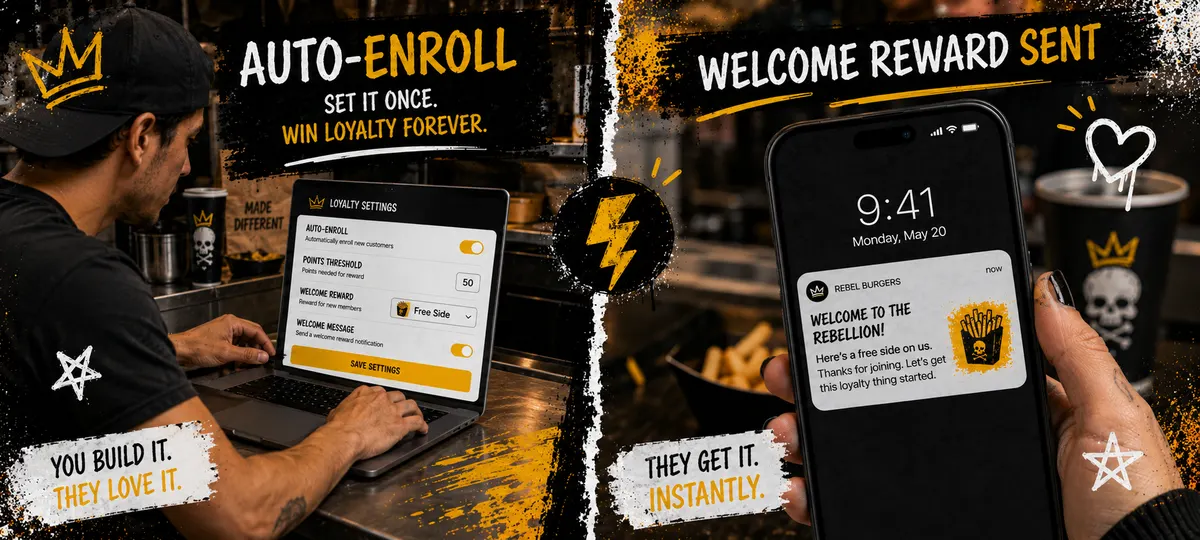
- Enable auto-enrollment. The best programs enroll customers at checkout automatically. No separate signup step. Outbites and similar platforms handle this with contact capture at the point of purchase.
- Write your one-liner. Staff need a 5-second explanation: "You are earning rewards on every order. Your next free [item] is [X] away." That is it.
- Configure the welcome message. An automated text or email that confirms enrollment and shows their current balance. Send within 1 hour of first qualifying order.
- Launch quietly. Do not announce to your full list yet. Run 2 weeks with walk-in traffic to catch any issues with tracking or redemption.
Five Loyalty Program Mistakes That Kill Enrollment
- Requiring a separate app download. Nobody downloads an app for a restaurant they have visited once. Web-based programs tied to checkout win every time.
- Making the reward unreachable. If your best customers cannot earn a reward in 30 days, your threshold is too high. They will forget the program exists.
- Complicated earning rules. If you need more than one sentence to explain it, simplify. "$1 = 1 point, 50 points = free side" beats any tiered multiplier system.
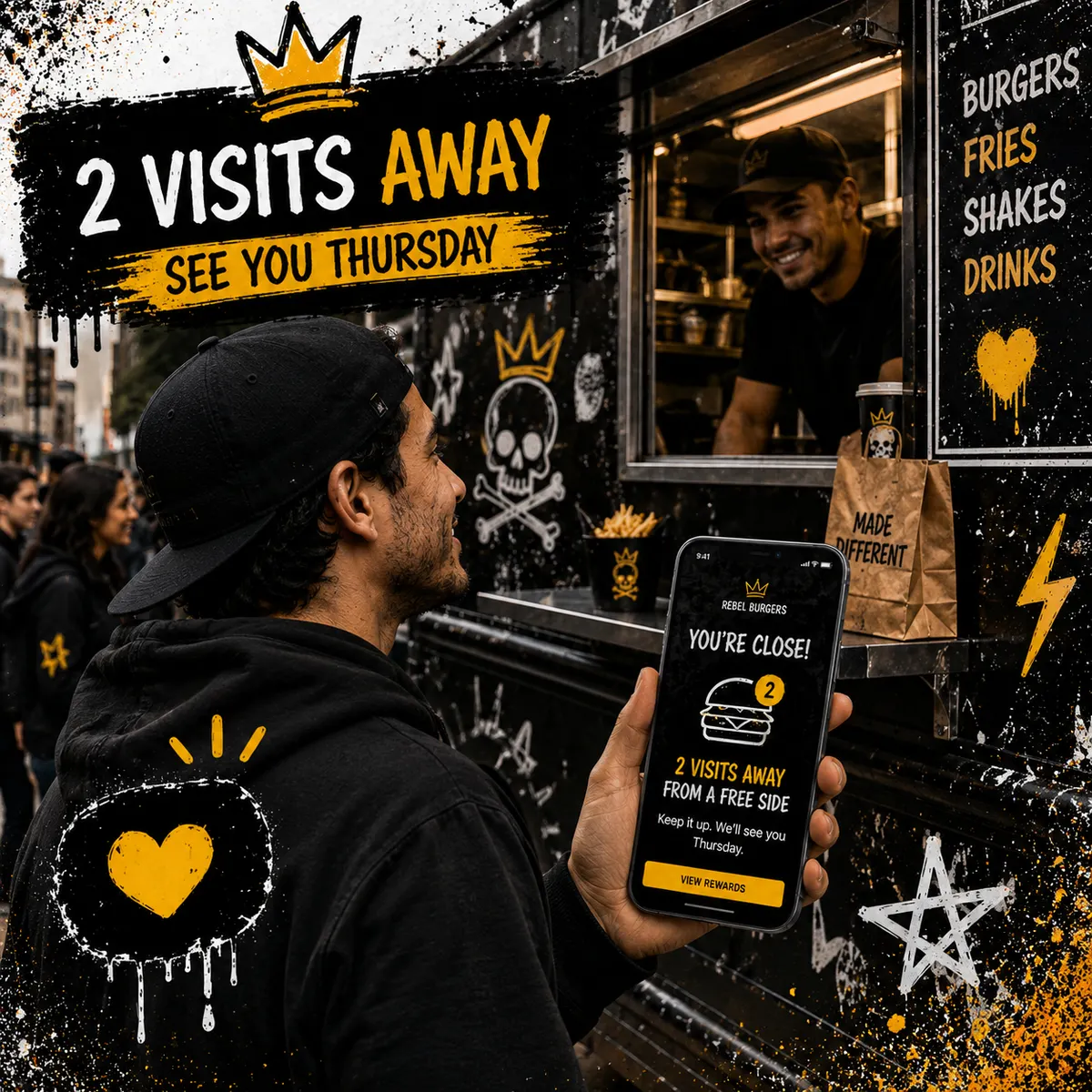
- No visibility into progress. Customers need to see how close they are. A progress bar in their order confirmation email drives more repeat visits than any marketing campaign.
- Ignoring lapsed members. If someone earned 40 of 50 points and disappeared, that is your highest-value win-back target. Send them a reminder.
Measuring Whether Your Program Is Working
Track these three numbers monthly:
- Enrollment rate: What percentage of new customers join the program? Target 40%+ if auto-enrolled at checkout, 15-25% if manual signup.
- Redemption rate: What percentage of earned rewards get redeemed? Target 60-80%. Under 40% means rewards are too hard to reach or customers forgot they are enrolled.
- Repeat visit lift: Compare visit frequency of loyalty members vs non-members. A working program should show 30-50% more visits from enrolled customers within 90 days.
If enrollment is low, your signup friction is too high. If redemption is low, your threshold is too aggressive. If repeat visits are flat, your reward is not compelling enough. Fix one variable at a time and give each change 30 days before evaluating.
Templates
Common questions about restaurant loyalty programs
A loyalty program is not a marketing gimmick. It is the infrastructure that makes your best customers worth 5x more over their lifetime. Pick a structure, set the math, launch this week, and measure in 90 days.
Loyalty that runs itself from checkout
Outbites includes built-in loyalty and rewards tied to your branded ordering link. Customers earn on every order. No app download. No extra fee. Just repeat visits on autopilot.
Start with Outbites
Katie Carswell
Account & Social Media Manager
Sharing firsthand stories and lessons learned from running an independent restaurant: margins, marketing, and owning your customer relationships.
How this guide was put together
This article was written for independent food businesses looking for practical ways to grow direct orders, repeat visits, and customer relationships. We keep the advice operator-focused, avoid generic playbooks, and update posts when the restaurant marketing landscape changes.