TL;DR
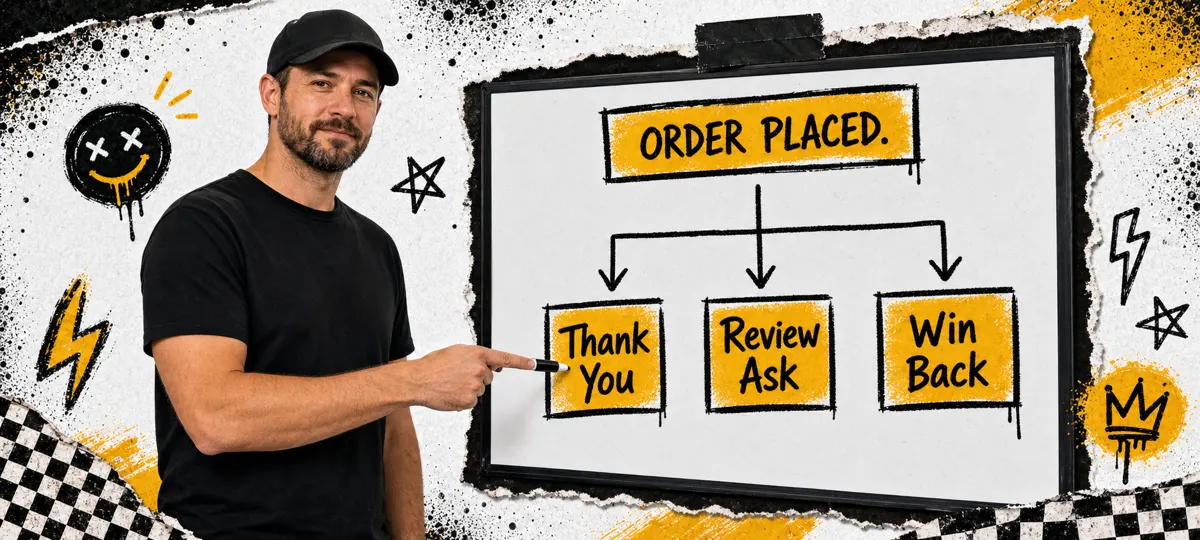
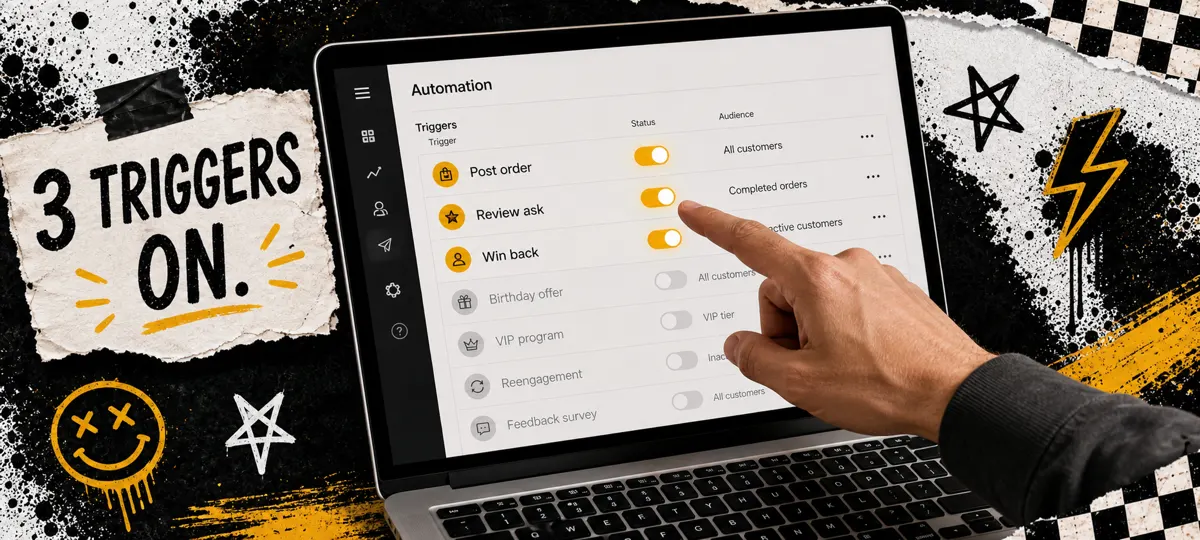
Automate post-order thank-you, review ask after they've eaten, and win-back around 30 days idle. Automate slow-night SMS only when you've got a real perk attached. Keep menu changes, collabs, and crisis comms manual. Audit your stack, block thirty minutes weekly to check triggers, and plan SMS so automation doesn't become spam with better grammar.
Marketing automation sounds like something franchise legal reviews for six months while you wait outside with a cold latte. For independents it's simpler: send the right message when a trigger fires, so you're not rebuilding the same text every Tuesday like a marketing groundhog.
This guide covers what to automate first on a small-business stack. Pair it with the email marketing guide and the 30-minute weekly routine so automation supports the habit. It shouldn't replace you talking to guests when it actually matters.
Automation vs Spam (The Line Guests Feel)
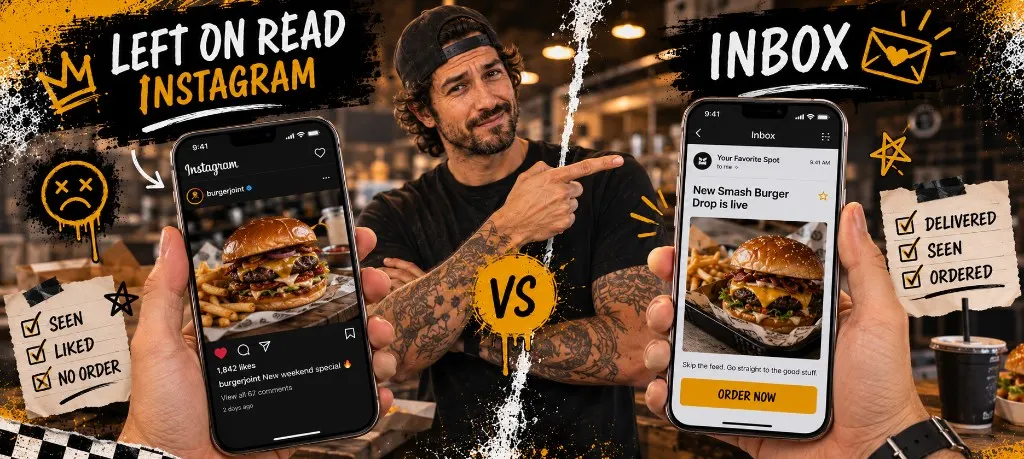
Good automation answers a moment: thanks for ordering, here's your receipt, want to come back Thursday. Bad automation blasts the same promo every Monday because the software default said so. One feels helpful. The other feels like your restaurant ghosted them after the first date, then texted "u up?" with a coupon code.
If you wouldn't send it manually to your favorite regular, don't automate it to the whole list. That's the whole filter. Pretty boring. Extremely useful.
Post-Order and Review Automations
Start here. These three fire from real orders, so they don't need a calendar invite or your brain at close.
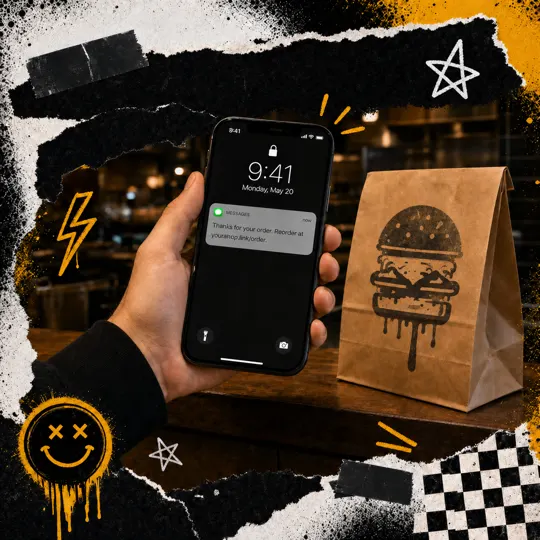
- Immediate: Order confirmation with items, total, pickup time. Transactional, not marketing. Guests want receipts, not poetry.
- ~24 hours later: Review ask with a direct Google link. One sentence. Only for completed pickups. Asking before they've eaten is premature celebration. Save the confetti for after the burrito settles.
- ~7 days later: Loyalty reminder if they haven't reordered. Stamp progress, not a novel. "You're 2 away from a free side" beats a three-paragraph brand story.
Order confirmation stays quiet and useful. The review ask waits until they've actually tasted the food. The loyalty nudge shows up once. If you stack all three into the same night, you've invented spam with better punctuation.
Slow-Night and Win-Back Triggers
Slow-night SMS fires when covers are light and you have a real offer: free drink tonight, half-price wings until 7, not "we exist." Nobody rearranges dinner plans for existential proof of restaurant life.
Win-back around 30 days idle pulls from email or SMS depending on opt-in. One channel per trigger. Texting and emailing the same "we miss you" in the same hour is how you get blocked faster than a soggy fry. See win-back campaigns for copy angles that don't sound like a breakup playlist.
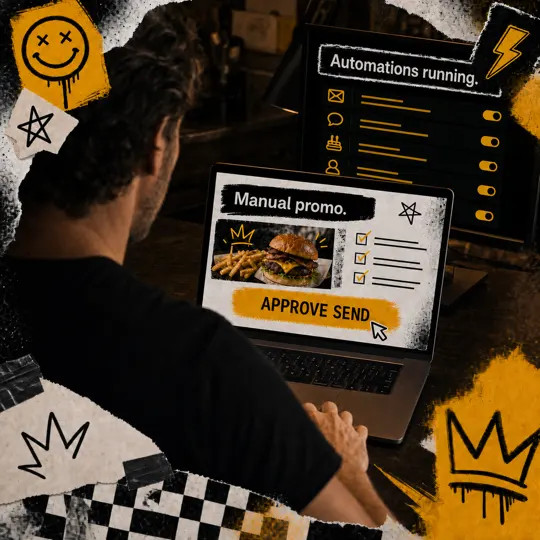
These triggers still need a weekly glance. Automation isn't "set it and pray." Block thirty minutes to check what fired, what flopped, and which one manual promo you'll approve with your actual voice on it.
Loyalty and Birthday Flows
Birthday offer with a seven-day window works. Loyalty milestone at five orders works. Generic "we miss you" every week does not. That's not nostalgia. That's clingy software.
Tie rewards to direct orders so marketplace guests have a reason to save your link. If the only path to the free side is another app checkout, you're automating commission payments with a smile. The loyalty setup guide covers stamp rules that don't torch margin.
Stack: What You Need vs Overkill
You don't need a command center that looks like air-traffic control. You need tools that fire when someone pays you.
- Need: Direct ordering with email and SMS, basic segments, trigger sends from real orders
- Nice: Loyalty tied to phone, birthday field, review link that doesn't break twice a month
- Overkill for year one: Six-tool Zapier chain, AI subject line generator, separate ESP you never log into, and a dashboard nobody opens before Thursday
If your "automation stack" requires a weekly meeting to remember how it works, it's not automation. It's a hobby with invoices. Plan SMS sends so the useful stuff doesn't pile into one guest's Tuesday.
Five Automation Mistakes (And Yes, We've Seen Them All)
- Automating before direct ordering works. Broken checkout plus cute emails is lipstick on a locked door. Fix checkout first.
- Same message on SMS and email the same hour. Pick one channel per trigger. Guests notice when you're in stereo.
- Review ask before food is eaten. Wait about a day on pickup. Give the chicken a chance to become an opinion.
- Set and forget for six months. Promo ends, link dies, automation keeps chirping. Check open rates monthly.
- Automating apologies. Bad night recovery stays human. Your "we messed up" email written by a template reads like a terms update.
Templates
Common questions about restaurant marketing automation
Automation should save you from repeating yourself, not from talking to guests when it matters. Audit the stack, turn on three triggers, block thirty minutes weekly to check them, and keep the human sends for the nights that need your name on the message. The robot can say thanks. You still say "come back Thursday, wing night's back."
Triggers on orders you control
Outbites bundles SMS, email, loyalty, and promos on direct checkout. Automate post-order and win-back without a six-tool stack that needs its own seating chart.
Start with Outbites
Katie Carswell
Account & Social Media Manager
Sharing firsthand stories and lessons learned from running an independent restaurant: margins, marketing, and owning your customer relationships.
How this guide was put together
This article was written for independent food businesses looking for practical ways to grow direct orders, repeat visits, and customer relationships. We keep the advice operator-focused, avoid generic playbooks, and update posts when the restaurant marketing landscape changes.