TL;DR
Capture email at direct checkout with a soft incentive, not a wall. Run three campaign types: new menu, slow-night push, and win-back after guests go quiet. Cap marketing sends around four per month for most single-location shops. Track clicks and attributed orders, not applause. Audit your stack, size your campaign budget, and steal the copy templates below before you bleach the whole list with "URGENT."
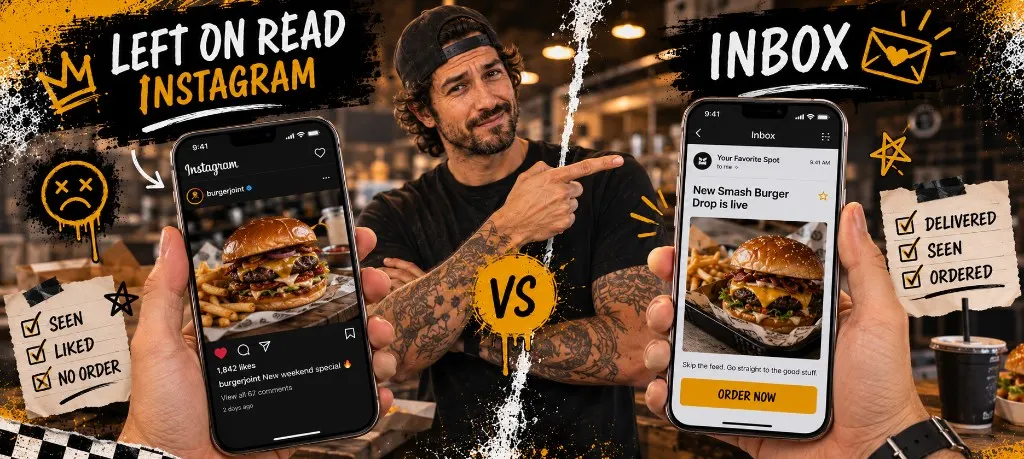
You have 2,400 Instagram followers and zero way to reach them when it's raining on a Wednesday. That's the "left on read" problem at restaurant scale. You posted. They double-tapped. Nobody ordered. Email fixes the part social never will: one send to people who already bought from you.
SMS owns the same-day "we're at the lot" drop. Email owns the story, the catering pitch, and the win-back with a link that doesn't evaporate in twenty-four hours. Start with the customer list playbook, keep SMS compliance open for texts, and use this guide as the email hub.
Why Email Still Beats Social for Owned Reach
You don't own Instagram. You own the inbox of everyone who typed an email at checkout. That list survives algorithm changes, account hacks, and the day TikTok decides your taco reel is for nobody within 40 miles.
Email fits the longer message: new menu drops, catering packages, holiday pre-order windows. SMS fits one sentence and a link. Use both. Don't make them fight over the same "quiet Tuesday" line like siblings in the back seat.
Before you write a subject line, check whether email is even in your stack or if you're still renting reach from platforms that don't return your guests' contact info.
Capture Emails at Checkout (Without Killing Conversion)
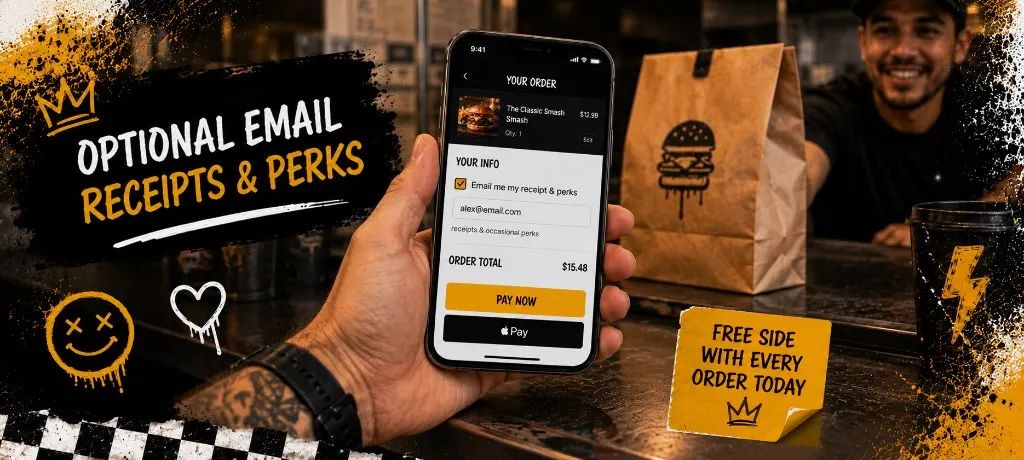
Required email fields make mobile checkout feel like a DMV form. Optional email with a one-line reason works: "Send me receipts and occasional perks." Pre-check only where the law allows. Always show unsubscribe on marketing sends.
- Optional field on direct checkout, not a separate signup page guests never finish
- Small perk for first email capture: free side or drink, not 20% off forever
- Receipt email is transactional. Marketing needs clear opt-in.
- Segment early: ordered in last 30 days, idle 30–90, catering leads
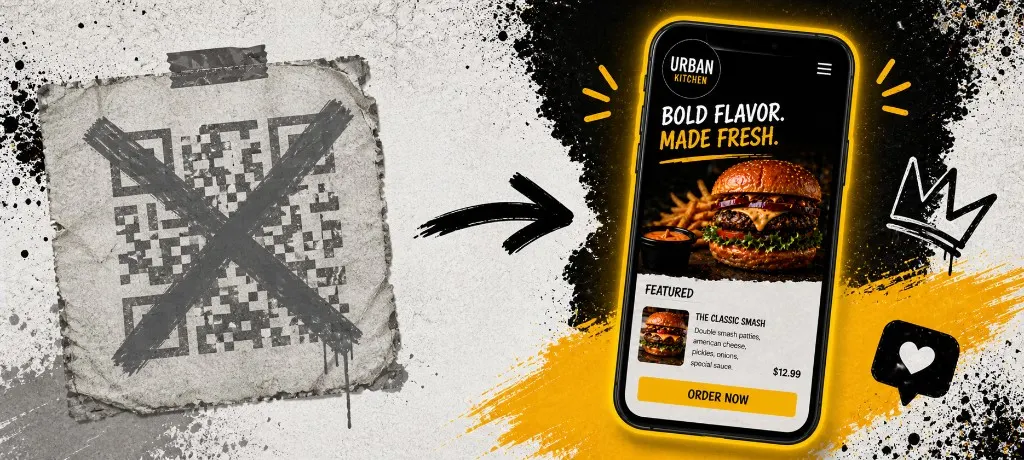
If you're still collecting the list itself, the first-party data guide walks through QR, bag stickers, and checkout capture without buying sketchy CSVs.
Campaign Types That Actually Get Orders
Pretty newsletters without a button are digital placemats. Guests skim, admire the photo, and go back to DoorDash. Every send needs one job and one link.
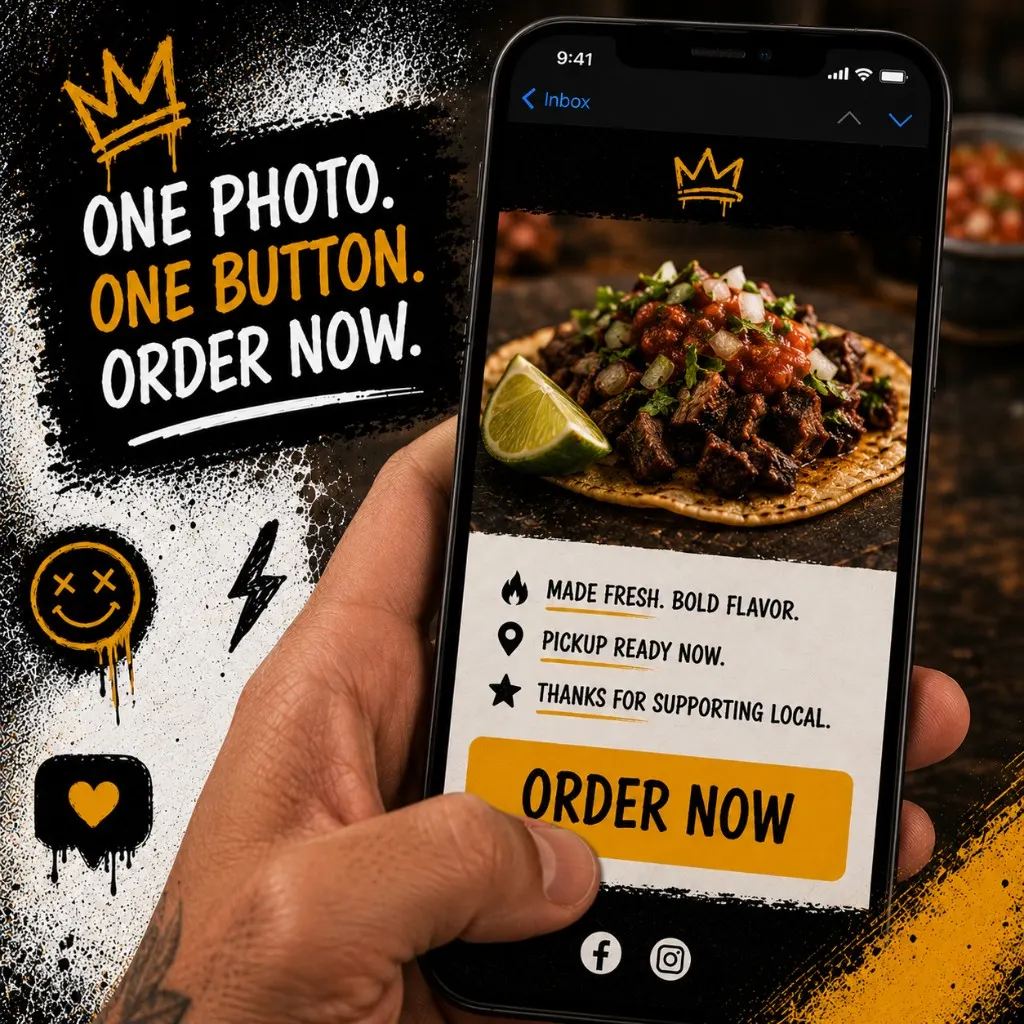
- New item or LTO: One photo, three sentences, order button. Test mid-morning on a weekday for lunch crowds.
- Slow-night push: "Quiet tonight. Pickup in 15." Link only. No essay about your chef's journey.
- Catering or event: Headcount, pickup window, deposit link. Email beats SMS for office admins who forward threads.
- Seasonal pre-order: Holiday pans, festival caps. Deadline in the subject line so nobody can claim they missed it.
Tools are cheap compared to a bad offer. Size what you can spend on campaigns before you buy another "AI email" subscription that writes like a robot apologizing for being a robot.
Win-Back Sequences (Without Looking Desperate)
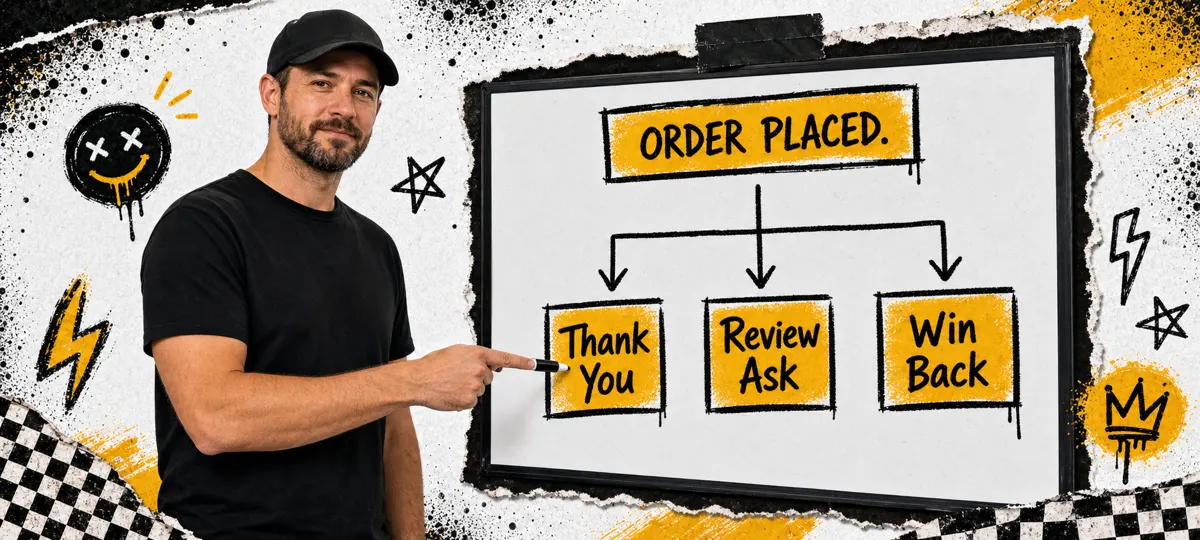
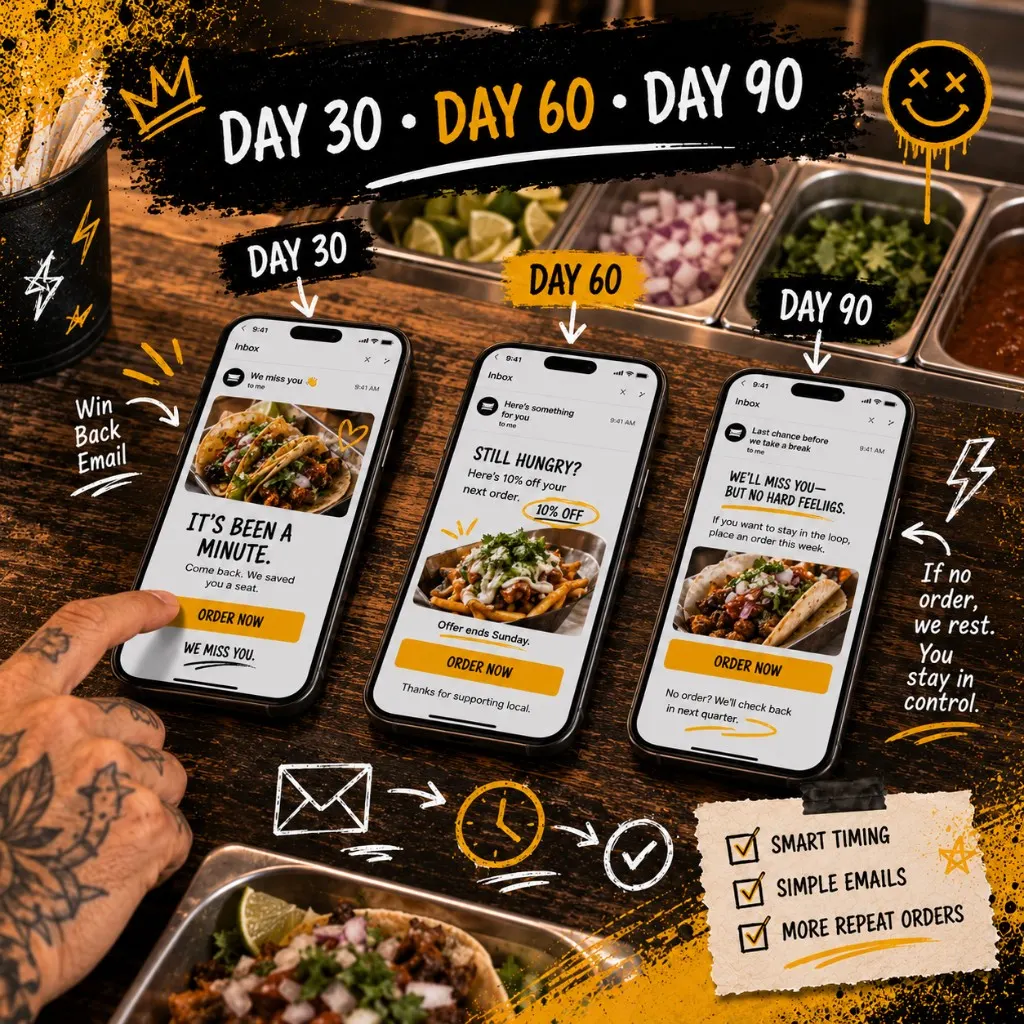
SMS often pings sooner (around two weeks idle). Email can carry a fuller offer a little later. A common email pattern: idle about 30 days gets email one (what's new + order link). Idle about 60 days gets email two (small perk, hard deadline). Idle about 90 days gets one last send, then quarterly only or a clean suppress.
Those windows are starting points, not law. Test against your own repeat cadence. Full tactics and SMS/email mix live in the win-back campaigns guide. Email carries the offer. A same-day SMS can follow for guests who opted into both.
Frequency and Compliance Basics
Around four marketing emails per month is plenty for most single-location shops. Every marketing send needs a clear way to unsubscribe. Don't buy lists. Don't scrape Yelp. Your checkout list is enough if you treat it like a guest, not a lead dump.
Transactional stuff (receipts, order ready) is different from "we miss you, here's a free cookie." Keep the marketing path opted-in. When you're ready to send, don't stare at a blank subject line. Steal these and swap the brackets.
Five Email Mistakes That Leave You on Read
- No order button. Pretty newsletter, zero clicks. Guests aren't spelunking for your URL.
- Same blast to everyone. Catering leads and Tuesday taco regulars need different copy.
- Weekly sends with nothing new. You train people to ignore you like background music.
- Subject lines that lie. "URGENT" for a slow Tuesday is how you earn a spam folder roommate.
- Never measuring orders. Opens can lie. Clicks and attributed orders tell the truth.
Mobile is where most of these get opened. One photo. Short copy. Order button above the fold. If they have to pinch-zoom to find "Order," you've already lost the lunch window.
Templates
Common questions about restaurant email marketing
Email isn't dead for restaurants. Bad email is dead. Capture at checkout, send with a reason, win back idle guests before they're gone for good, and measure orders not applause. Audit the stack, size the budget, paste a template, and ship one campaign this week. Leave the "left on read" energy for group chats, not your regulars.
Email on the orders you own
Outbites captures guest email at direct checkout and gives you SMS, loyalty, and campaigns in one stack. Build the list while you take orders, not after.
Start with Outbites
Katie Carswell
Account & Social Media Manager
Sharing firsthand stories and lessons learned from running an independent restaurant: margins, marketing, and owning your customer relationships.
How this guide was put together
This article was written for independent food businesses looking for practical ways to grow direct orders, repeat visits, and customer relationships. We keep the advice operator-focused, avoid generic playbooks, and update posts when the restaurant marketing landscape changes.