TL;DR
Vague "share us" asks die on the wall. Dual rewards (friend gets a first-order perk, referrer gets a thank-you) plus a trackable code on your direct ordering link actually spread. Cap redemptions, set an expiry, run the margin math before you print stickers, then push the invite on receipts, bags, and SMS. Quiz your reward fit, check loyalty ROI, and run a readiness check before launch day.
You taped a "Tell a friend about us!" flyer next to the salsa bar. It has the same energy as a "Employees must wash hands" sign. Technically present. Spiritually ignored. Nobody's recruiting for free when the friend gets nothing and the regular gets a smile.
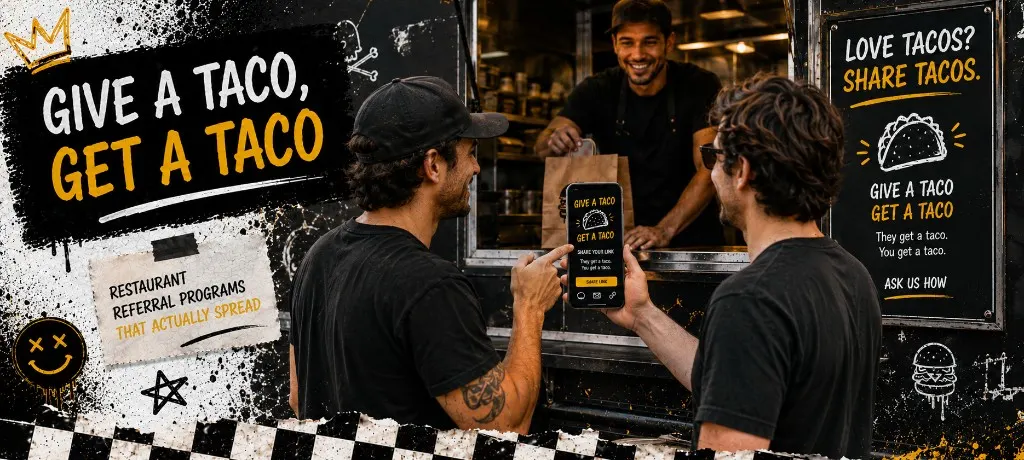
Referral programs that spread pay both sides and live on a path you own. Give a taco, get a taco. Friend gets a first-order perk. Referrer gets a thank-you. Code ties it to your direct link so you're not funding a DoorDash account. Pair this with the direct ordering incentives guide and the loyalty setup guide.
Why Most Referral Programs Flop
Most "referral" offers are just Instagram captions with homework attached. Share our page. Tag three friends. Hope the algorithm feels generous. That's not a program. That's a wish with a hashtag.
- Only one side gets paid. Friend gets 10% off. Referrer gets vibes. Regulars stop sharing after the first awkward text.
- No tracking. You can't tell a real referral from your cousin who always had the code. Or from the group chat that turns one code into a free-taco riot.
- Marketplace owns the relationship. Guests refer into DoorDash and you still pay commission on the "new" customer. Congrats. You recruited for the app.
- Reward is vague. "Something free soon" isn't a taco. People share concrete food. Not vibes. Not "loyalty points TBD."
If the invite doesn't answer "what do I get and what does my friend get" in one sentence, it won't leave the parking lot. Tacos travel. Ambiguous coupons don't.
Give a Taco, Get a Taco: Structures That Spread
The model is boring on purpose. Friend orders direct with your code and gets a first-order perk. Referrer gets a matching thank-you after that order lands. Same food cost language on both sides so nobody feels played. You're not inventing crypto. You're inventing a reason to text a coworker.
- Free item each: Friend gets a free taco (or side) on first direct order. Referrer gets the same after the friend pays. Cap at one successful referral per month if volume spikes.
- Stamp boost: Friend starts loyalty with a bonus stamp. Referrer gets a bonus stamp when the friend checks out. Works if you already run browser stamps from the loyalty guide.
- First-order perk + thank-you credit: Friend gets a free drink. Referrer gets $5 off next direct order. Keep credits on the direct path only.
- Guardrails that save your sanity: Expiry date, one code per guest, new customers only for the friend perk, and a hard stop if the same phone redeems twice.
Name the offer like food, not like a bank. "Give a taco, get a taco" beats "Ambassador Rewards Tier 1." People remember tacos. They forget tiers. Tier systems are how airlines make you cry at gate B12.
Do the Margin Math Before You Print Stickers
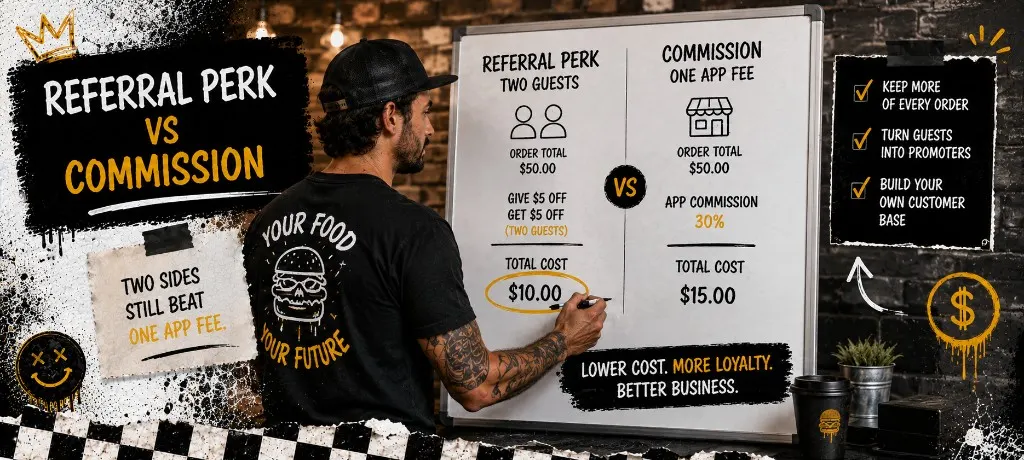
Example math, not gospel: two free taco perks at about $2 food cost each is roughly $4–$6 out the door. A new direct guest on a $25 ticket who comes back three times is worth a lot more than that food cost. Compare that to paying 15–30% delivery marketplace commission on the same tickets if they'd found you through an app instead.
Run your own numbers in the loyalty ROI calculator below. Treat referral rewards like a paid acquisition channel with a food cost receipt. If the dual perk costs more than the first two direct tickets' contribution, you're not running marketing. You're running a taco charity. Noble. Unprofitable.
How the Invite Actually Travels
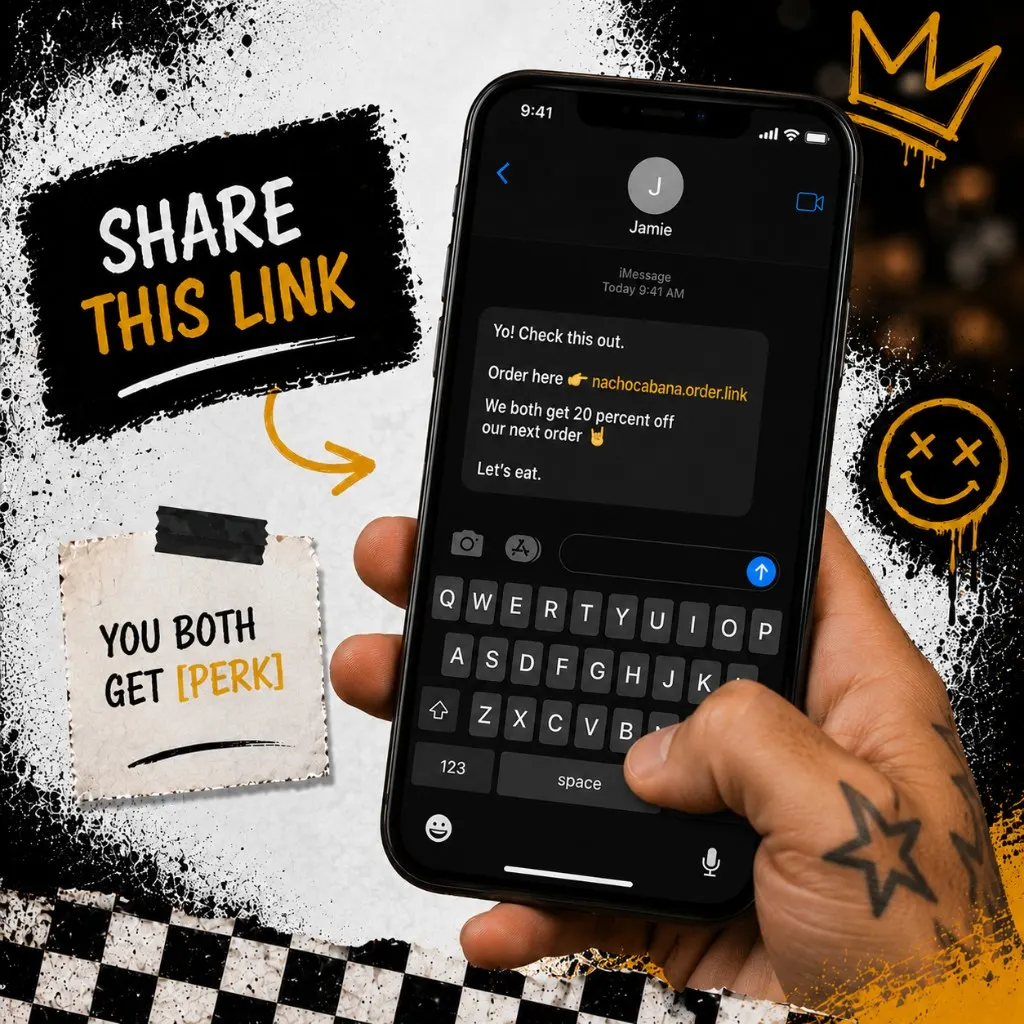
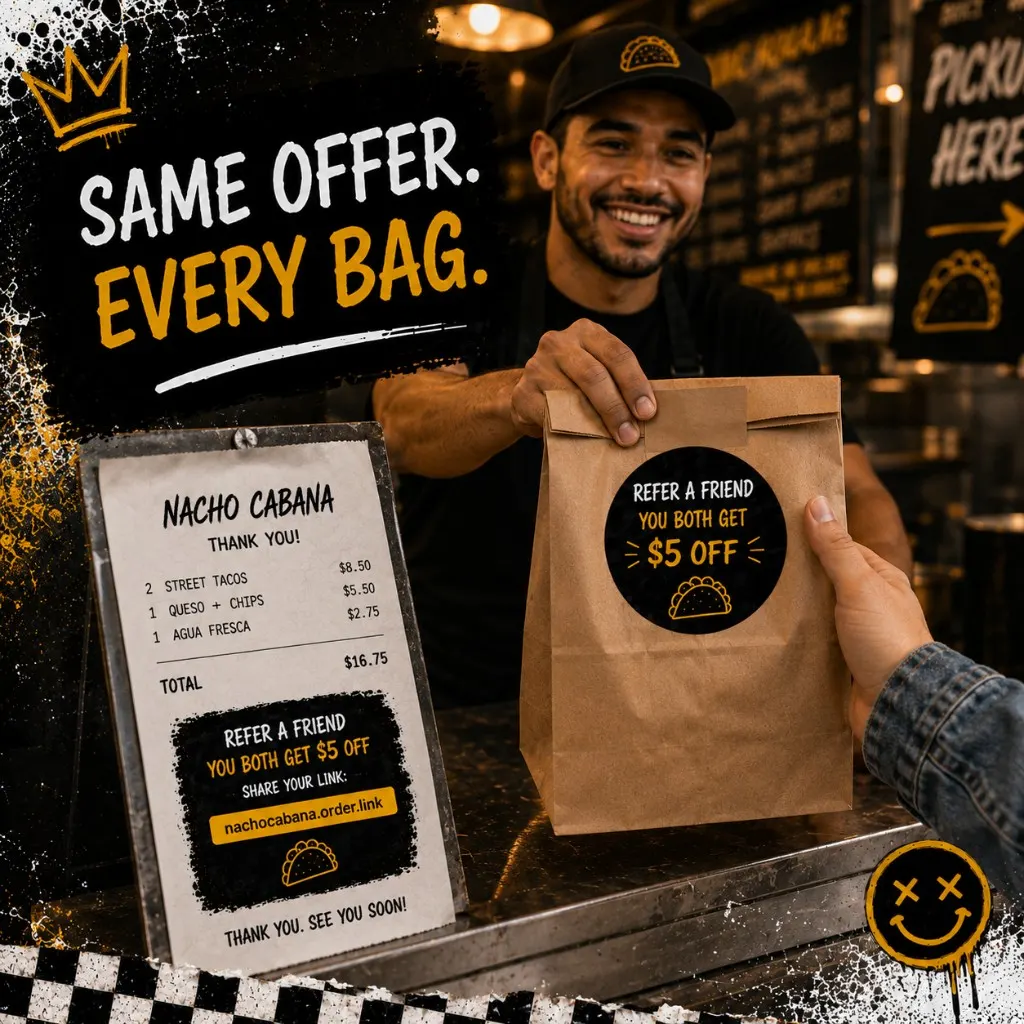
Codes don't teleport. You put them where hands and phones already are. Receipt footer. Bag sticker. Table tent. Staff line at handover. One SMS to people who already love you. The SMS marketing guide covers compliance so your taco invite doesn't become a TCPA headache.
You don't need a fancy "referral product" bolted on. You need a direct ordering link, a loyalty or promo code you can track, and a way to text your list. Outbites bundles those pieces so the invite lands on checkout you own, not a marketplace cart. The taco still has to taste good. Software can't fix a dry shell.
- Receipt line: "Give a taco, get a taco. Your code: [CODE]. Friend orders direct: [LINK]."
- Bag sticker: Short URL + the offer name. Stick it where the grease doesn't win.
- SMS to fans: One send to recent direct guests. Not a weekly nag. One clear invite.
- Staff script: "If you send a friend, you both get a free taco on the first direct order. Code's on the receipt."
Launch Checklist That Doesn't Break the Kitchen
Launch day isn't "hope and a Canva graphic." Write the rules, train the closer, and decide what you'll measure before someone tries to redeem seven codes with seven burner emails. Yes, people try. It's a food truck, not a trust fall.
- Write the dual reward in one sentence guests can repeat
- Create unique codes or a tracked promo on the direct link
- Set expiry and a monthly referral cap
- Limit friend perk to first-time direct guests
- Train staff on the one-line pitch at bag handover
- Add receipt footer and bag sticker before you SMS
- Pick a two-week review window: codes used, new direct guests, food cost of redemptions
- Kill or shrink the offer if abuse shows up or food cost outruns new-guest value
Once the checklist is green, put the code where hands already are. Bag sticker. Table tent. Receipt footer. The invite only spreads if it leaves with the food.
Templates
Common questions about restaurant referral programs
Referral programs aren't magic. They're a clear give, a clear get, a code you can track, and enough repetition that guests can pitch it without a script laminated to the register. Give a taco, get a taco. Then measure who actually showed up. The flyer by the salsa bar can stay for atmosphere. The real work is on the receipt.
Run referrals on the checkout you own
Outbites puts direct ordering, loyalty, and SMS on one stack so give-get offers land with guests you can actually message again. Skip recruiting for the apps. Keep the regulars and the friends they bring.
Start with Outbites
Katie Carswell
Account & Social Media Manager
Sharing firsthand stories and lessons learned from running an independent restaurant: margins, marketing, and owning your customer relationships.
How this guide was put together
This article was written for independent food businesses looking for practical ways to grow direct orders, repeat visits, and customer relationships. We keep the advice operator-focused, avoid generic playbooks, and update posts when the restaurant marketing landscape changes.