TL;DR
You can't match chain ad spend. You can beat them where it counts: Google map pack for "near me" searches, a direct link guests save, SMS that fills slow nights, loyalty that brings regulars back, and reviews that build trust faster than a billboard. Run the marketing budget calculator at your real revenue, pick a loyalty model with the quiz, and audit your Google Business Profile before you buy another tool.
The chain down the street runs TV spots, paid social, and an app with push promos you can't afford to match. Good. Most of your guests aren't picking you because of a jingle. They're picking who shows up for "tacos near me," who remembers their order, and who makes reordering stupid easy.
Small restaurants compete with chains online by stacking a few tools that compound: local SEO, direct ordering, SMS, loyalty, and reviews. Five moves you run every week, not fifteen dashboards. This playbook is for food trucks, pop-ups, ghost kitchens, and small restaurants who want practical marketing tools in 2026, not another enterprise pitch deck.
They Bought the Billboard. You Own the Regular.
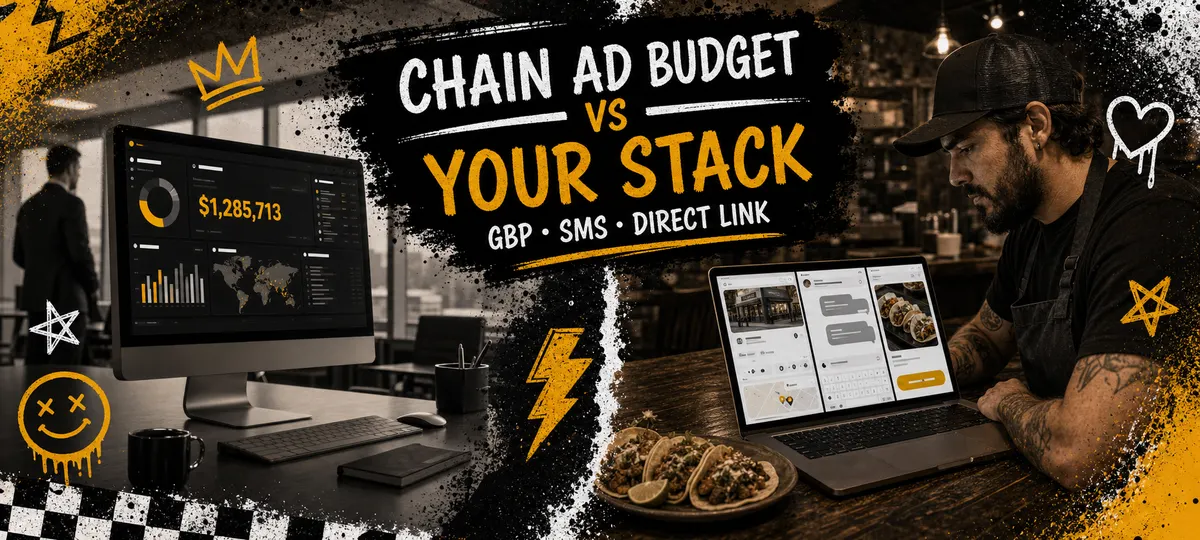
Chains buy impressions at scale: national creative, app install campaigns, franchise co-op ad funds, and marketplace promos subsidized by volume. They're chasing strangers. You already have people who ate your food and liked it. Your job is giving them a reason to come back, not buying attention from folks who've never heard of you.
- Paid social and display aimed at broad awareness
- Branded mobile apps with push notification budgets
- Marketplace promos that train guests to order inside someone else's checkout
- Agency retainers for creative most small restaurants never use
Five Tools. Not Fifteen Tabs.
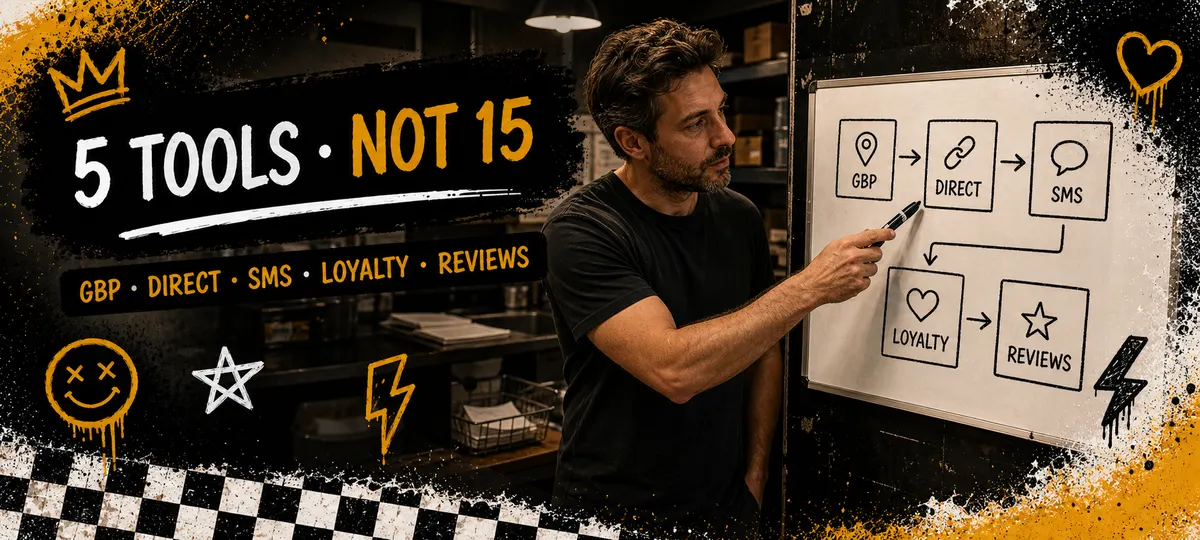
You don't need a chain-sized MarTech stack. You need five tools that work together: a complete Google Business Profile, a direct ordering link on that profile and your site, SMS for same-week fills, loyalty for repeats, and steady reviews. Get those five running smoothly before you add anything else.
Direct ordering is the hub. It captures phone and email at checkout, feeds SMS and email, and keeps margin off marketplace rent. Compare platforms in the 2026 buyer's guide. Build the list workflow in the first-party data guide.
Loyalty Without the App Store Tax
Chains push app downloads because they can afford the ads. Your regulars already know where to find you. They'll tap the link in your Instagram bio long before they hunt an app in the store for Tuesday lunch. Let them earn loyalty rewards through the same link they use to order, without making them download an app first.
- Visit-based stamps: Simple, visible, works in the browser. Sixth order free fries beats a complicated points ledger.
- Spend-based points: Fits higher tickets and catering-adjacent menus when guests order often enough to care.
- First-order perk on direct only: Trains guests to save your link instead of the marketplace app.
- Win-back SMS after 30 days idle: Cheaper than buying a new guest through ads. See the win-back guide.
Local SEO: The Free Seat Chains Can't Buy
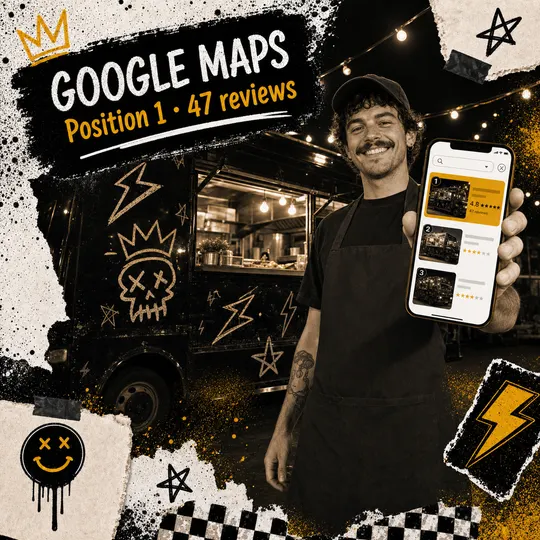
Paid ads stop working the moment you stop paying. Local SEO keeps working long after you do. Keep your Google Business Profile complete, make sure your name and address match everywhere online, post fresh photos, and ask for reviews regularly. That mix keeps pulling in searchers for months. If you run a food truck, post weekly location updates and use service areas instead of a fake storefront address. For the full checklist, see restaurant local SEO and the 30-minute weekly routine.
Stop Renting the Relationship
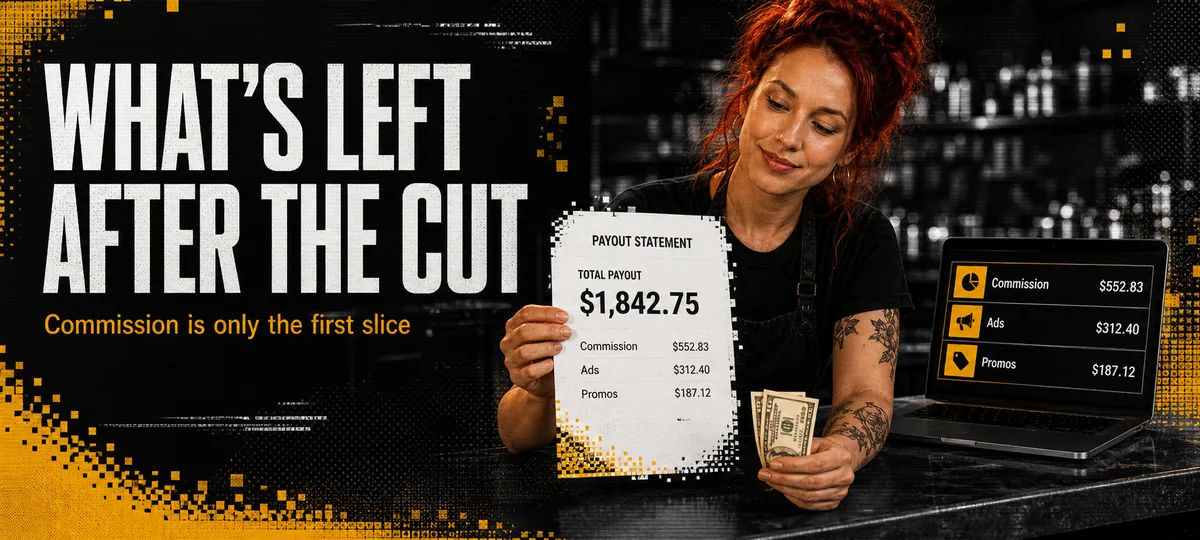
Every order through a marketplace app rents the relationship, while direct ordering lets you keep the ticket, the contact info, and the right to message that guest again. You don't have to quit delivery apps overnight, but you should start moving your repeat customers to a link you control. To make the switch, pair the margin math from the commission guide with the incentives from the direct ordering incentives post.
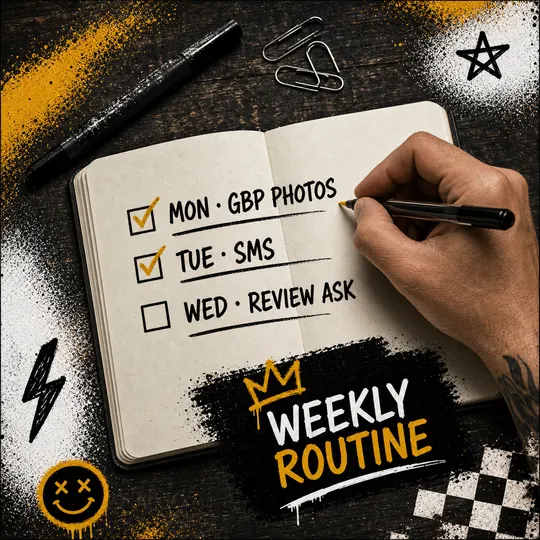
Thirty Minutes. Same Day. Every Week.
Chains plan quarterly campaigns, but your advantage is weekly habits. Block thirty minutes on the same day every week and run the routine below. It's the whole five-tool stack in motion, and it's enough to stay visible without hiring a marketing team.
- Update Google Business Profile photos or hours if anything changed
- Send one SMS with a direct link and a real perk for slow-day fills
- Ask two happy guests for a Google review with your direct review link
- Check direct order count vs marketplace count for the week
- Post one proof point: line out the door, new menu item, or catering win
Five Ways Small Restaurants Stay Invisible (On Purpose, Somehow)
- Buying tools before GBP is complete. Ads amplify a weak foundation. Fix findability first.
- Running marketplace promos stronger than direct perks. You train guests to stay inside the app.
- No contact capture at checkout. Every anonymous order is a guest you can't message next week.
- Posting without a CTA. Pretty food photos need a link, hours, or location every time.
- Skipping SMS because "we have Instagram." Regulars don't refresh your feed before lunch. They read texts.
Templates
Common questions about competing with chain restaurants online
You won't outspend chains. You can out-execute them where locals actually decide: search, text, and reorder. Run the budget math, pick a loyalty model, finish your GBP audit, and block thirty minutes next Monday. That's how small restaurants compete online in 2026.
Stack tools built for small restaurants
Outbites bundles direct ordering, SMS, email, loyalty, and customer data without a chain-sized monthly bill. Compete on repeats, not ad auctions.
Start with Outbites
Katie Carswell
Account & Social Media Manager
Sharing firsthand stories and lessons learned from running an independent restaurant: margins, marketing, and owning your customer relationships.
How this guide was put together
This article was written for independent food businesses looking for practical ways to grow direct orders, repeat visits, and customer relationships. We keep the advice operator-focused, avoid generic playbooks, and update posts when the restaurant marketing landscape changes.