TL;DR
Local SEO is a checklist, not a mystery. Complete your Google Business Profile (every field, 10+ photos, correct category). Make NAP identical everywhere. Set unique title tags with city + cuisine on every page. Get 2-5 reviews per week (not 50 in one burst). Run PageSpeed Insights monthly and fix the red items. Food trucks: use service areas instead of an address and post weekly location updates. Check Search Console weekly. Ten minutes of attention per week beats any amount of paid ads without this foundation.
Your competitor ranking above you on Google is not lucky. They did a handful of specific things you have not done yet. Local SEO for restaurants is not mysterious. It is a checklist. Most independent operators skip it because nobody taught them the checklist, and the SEO industry makes it sound harder than it is.
Run through the scorecard below and see where you stand. Most restaurant owners score under 50% on their first try. That is not a failure. It is an opportunity your competitors already filled.
Why Your Competitor Shows Up Above You (It Is Not Random)
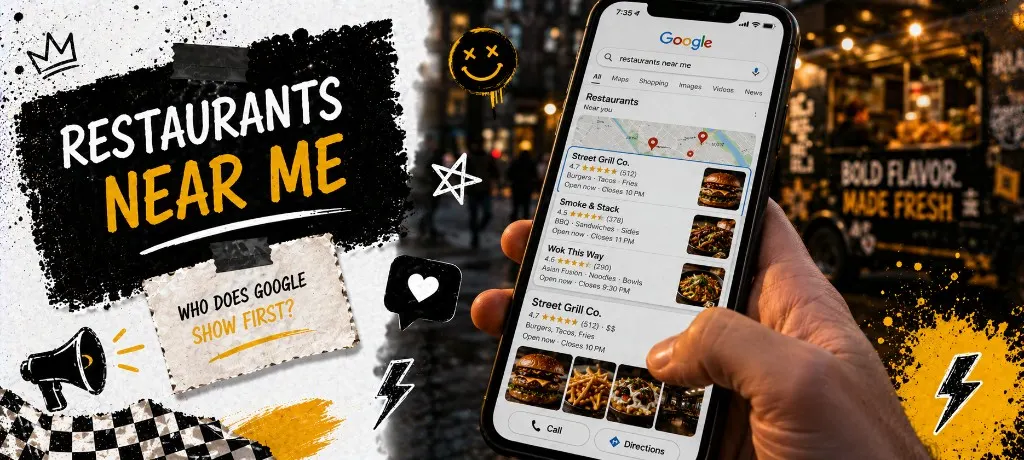
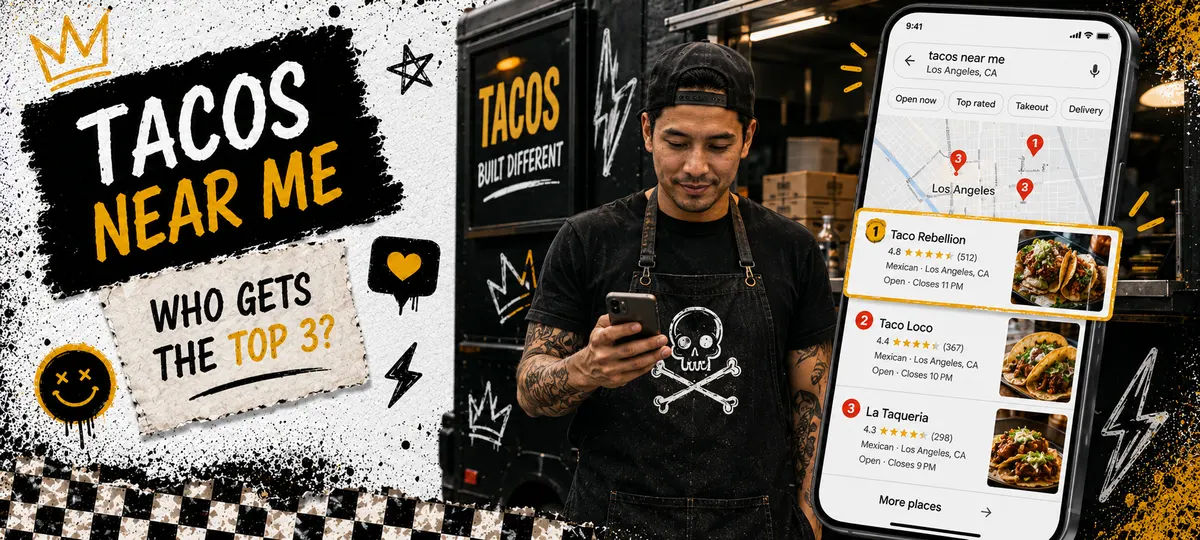
Google uses a specific set of signals to decide which restaurants appear in the map pack (those top 3 results with pins). The algorithm weighs relevance, distance, and prominence. You cannot control distance. But relevance and prominence are entirely within your reach.
The restaurant ranking above you likely has a complete Google Business Profile, more recent reviews, consistent business info across directories, and a website that loads fast on mobile. None of these require a developer or an agency. They require 30 minutes per week of focused attention.
The Six Ranking Signals Google Uses for Local Restaurants
1. Google Business Profile completeness
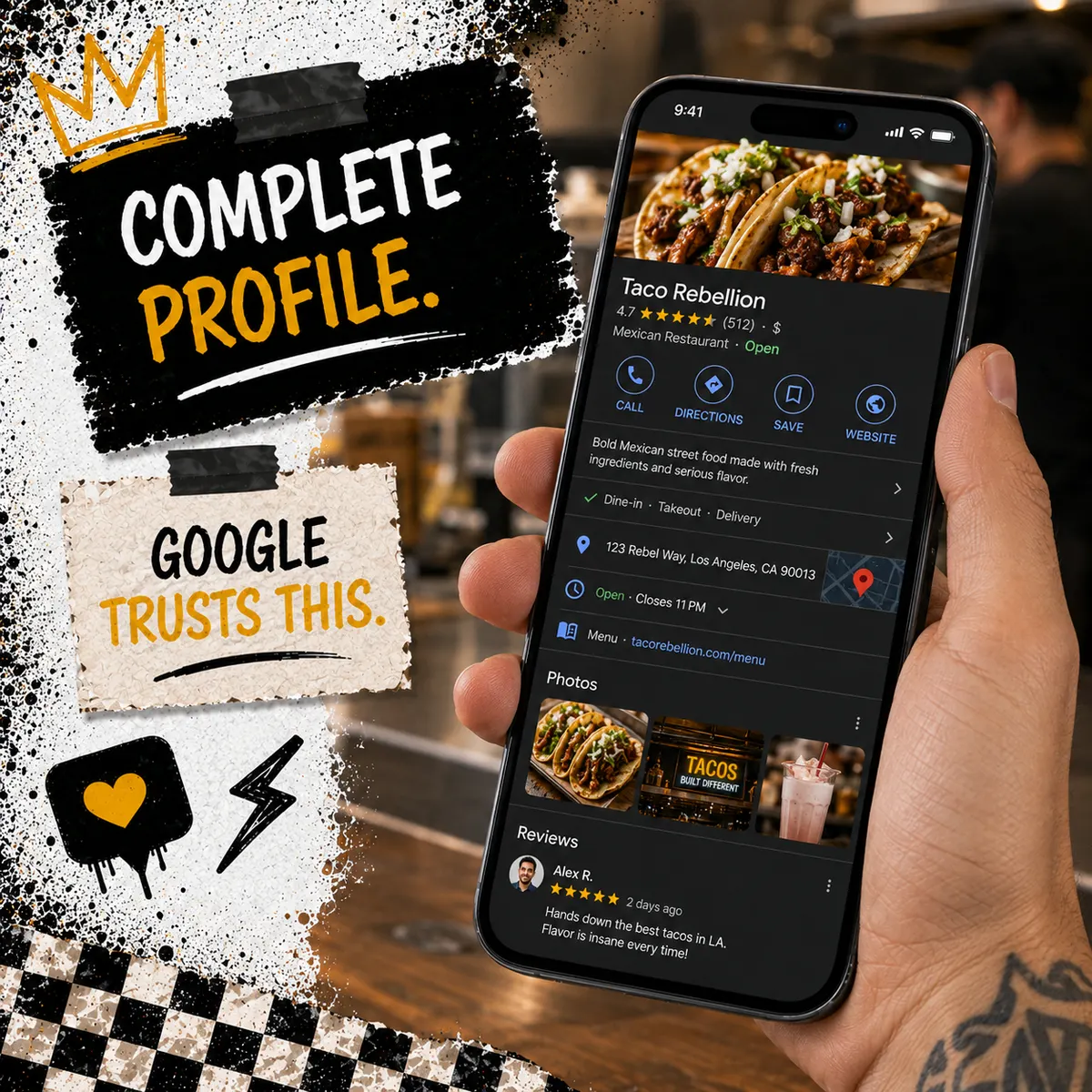
A half-filled GBP is the number one reason restaurants underperform in local search. Google explicitly says businesses with complete profiles are 2.7x more likely to be considered reputable. Fill every field: hours (including holiday hours), menu link, business description with your cuisine and city, attributes (outdoor seating, delivery, etc.), and service areas.
2. On-page SEO and site structure
Your website needs a unique title tag on every page that includes your city and food type. "Best Tacos in Austin | [Restaurant Name]" beats "Home | [Restaurant Name]" every time. Your meta description should be written for humans but include the search terms they use. If your homepage does not mention your city and cuisine within the first 100 words, fix that today.
3. Reviews and review velocity
Total review count matters, but recency matters more. A restaurant with 200 reviews that has not gotten one in 3 months looks stale to Google. Aim for 2 to 5 new reviews per week. The Google reviews guide covers exactly how to do this without being annoying.
4. NAP consistency across directories
NAP stands for Name, Address, Phone. If your GBP says "123 Main St" but Yelp says "123 Main Street" and your website says "123 Main St, Suite A", Google loses confidence in your location data. Pick one format and make it identical everywhere: GBP, Yelp, TripAdvisor, Apple Maps, Facebook, your website footer.
5. Mobile speed and Core Web Vitals
Over 60% of restaurant searches happen on phones. If your site takes more than 3 seconds to load on mobile, Google deprioritizes it. Run your URL through PageSpeed Insights (free). Fix the biggest items first: compress images, remove unused scripts, and make sure your hosting is not on a cheap shared plan that slows everything down.
6. Backlinks and local citations
Citations are mentions of your business on other websites (directories, food blogs, local news). Each one tells Google your business is real and relevant to your area. Start with the free ones: Yelp, TripAdvisor, Apple Maps, Bing Places, Facebook. Then look for local food blogs, event listings, and chamber of commerce directories.
Google Business Profile Fixes You Can Do in 15 Minutes
Log in to your GBP right now and check these. Most take under 2 minutes each:
- Add 5 new photos. Food shots, your truck or storefront, your team. Google shows businesses with photos get 42% more direction requests.
- Write your business description. 750 characters max. Include your city, cuisine type, and what makes you different. No keyword stuffing.
- Set your primary category correctly. Use the widget below to find the right one. Wrong category is the #1 fixable mistake.
- Add your menu link. Point it to your direct ordering page, not a PDF. This is free traffic to your checkout.
- Enable messaging. Google rewards profiles that are responsive. Turn it on and answer within 24 hours.
- Post a Google update. A photo with a short caption counts. Do one per week. It signals activity.
On-Page SEO Checklist for Restaurant Websites
Whether you built your site on Squarespace, WordPress, or a platform like Outbites that handles SEO automatically, these basics apply:
- Title tags: Every page gets a unique title. Format: [Primary keyword] | [Restaurant Name]. Example: "Best BBQ in Dallas | Smokey's Pit"
- Meta descriptions: 150-160 characters. Written for humans but include your city + cuisine. This is your ad copy in search results.
- H1 heading: One per page. Should include your primary keyword naturally.
- Image alt text: Describe the image with keywords where natural. "Pulled pork sandwich plate at Smokeys Pit Dallas" beats "IMG_3847.jpg"
- Internal links: Link your blog posts to your menu, your about page to your ordering link, your footer to your Google Maps pin.
- Schema markup: Add LocalBusiness or Restaurant schema to your homepage. Outbites does this automatically. If you are on WordPress, use a schema plugin.
What Food Trucks and Pop-Ups Need to Know About Local SEO
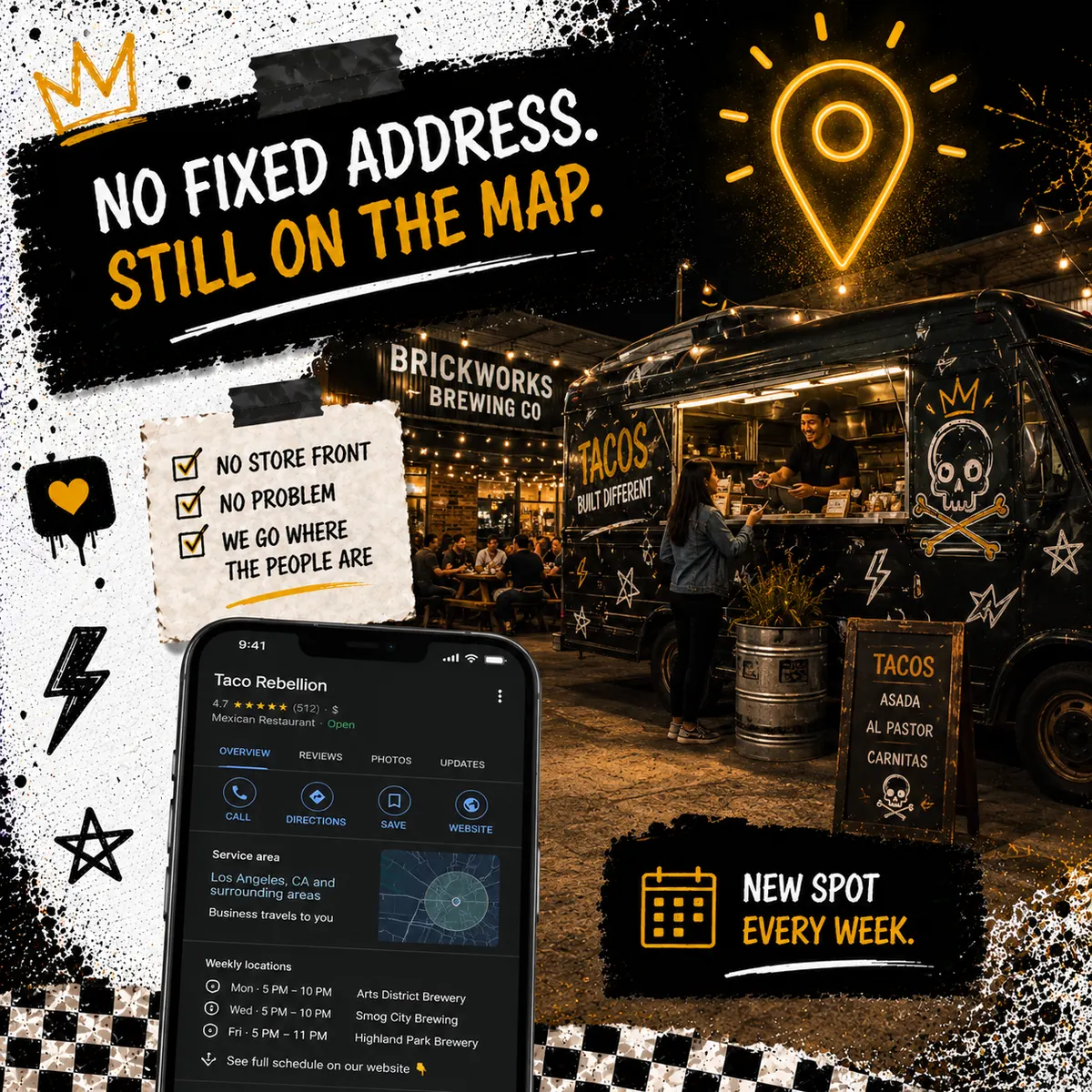
Food trucks face a unique challenge: no fixed address. Google still lets you rank, but you need to handle it differently.
- Use a service area instead of a street address. In GBP, set your service area to the cities or neighborhoods you serve. You will not show a pin on the map, but you will appear in searches for those areas.
- Update your hours and location weekly. Google rewards active profiles. Every time you post where you will be this week, that counts as activity.
- Build a home base page on your website. Even without a fixed location, have a page that mentions your primary city. "Austin Food Truck | [Name]" as your homepage title still works.
- Collect reviews from every regular spot. Reviews that mention specific locations ("Found them at the Barton Springs lot") help Google associate you with those areas.
Measuring Progress Without Expensive Tools
You do not need Ahrefs, Semrush, or any paid SEO tool to track local restaurant SEO progress. Start with a GBP completeness audit so you know which profile gaps are still costing you map pack clicks.
Once your profile is solid, these free tools cover the rest of your weekly check-in:
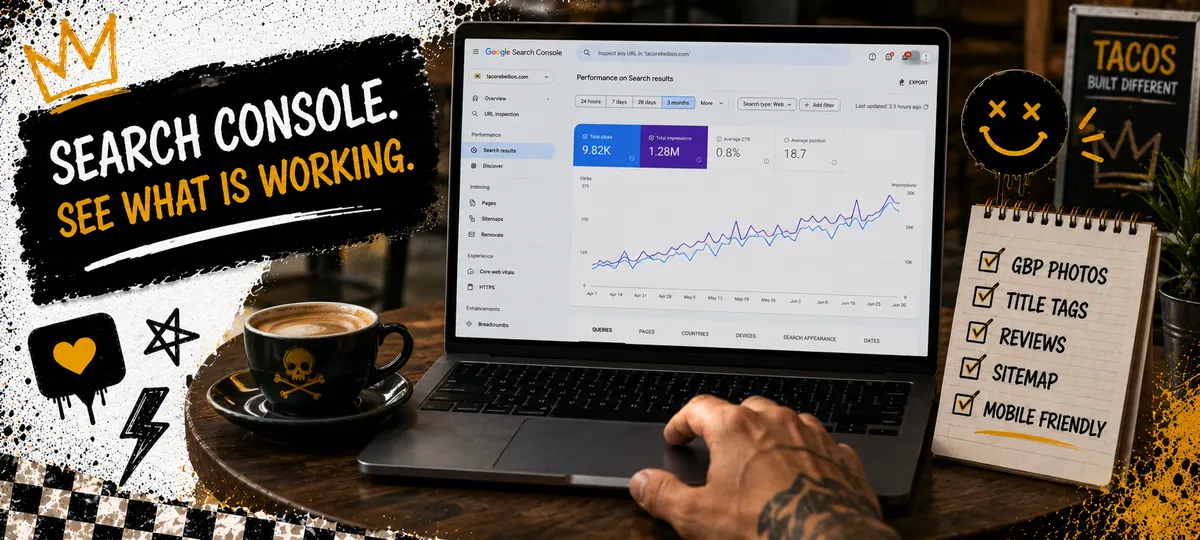
- Google Search Console: Shows which queries bring people to your site, how many impressions and clicks you get, and which pages rank. Check weekly.
- Google Business Profile Insights: Shows how many people found you via search vs maps, what queries they used, and how many requested directions or called. Check monthly.
- PageSpeed Insights: Free speed test. Run it monthly on your homepage and ordering page. Green scores mean Google is happy.
- Incognito search test: Open an incognito window, search "[your cuisine] near [your city]" and see where you rank. Do this from a phone for the most accurate result.
Fold these checks into your 30-minute weekly marketing routine. Five minutes on SEO monitoring per week is enough to catch issues before they cost you traffic.
Templates
Common questions about restaurant local SEO
Local SEO is not a one-time project. It is a weekly habit. Ten minutes on GBP updates, a few review requests, and one check on Search Console. Stack that over 3 months and you will outrank restaurants that spend money on ads but ignore their organic presence.
Get found on Google without the guesswork
Outbites builds your restaurant a fast, SEO-optimized ordering page with LocalBusiness schema, proper meta tags, and mobile performance baked in. Rank higher and convert that traffic into direct orders.
Start with Outbites
Katie Carswell
Account & Social Media Manager
Sharing firsthand stories and lessons learned from running an independent restaurant: margins, marketing, and owning your customer relationships.
How this guide was put together
This article was written for independent food businesses looking for practical ways to grow direct orders, repeat visits, and customer relationships. We keep the advice operator-focused, avoid generic playbooks, and update posts when the restaurant marketing landscape changes.